
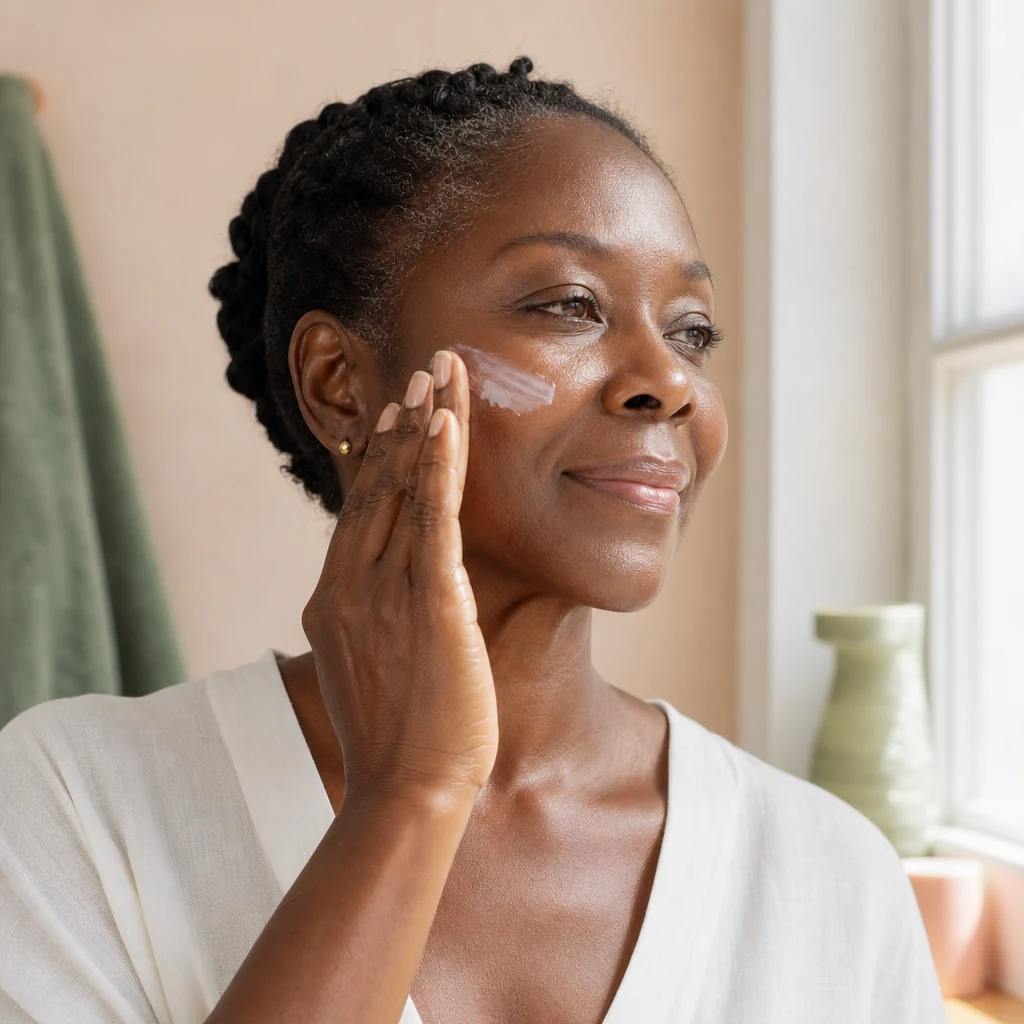
 🔍 Hover to zoom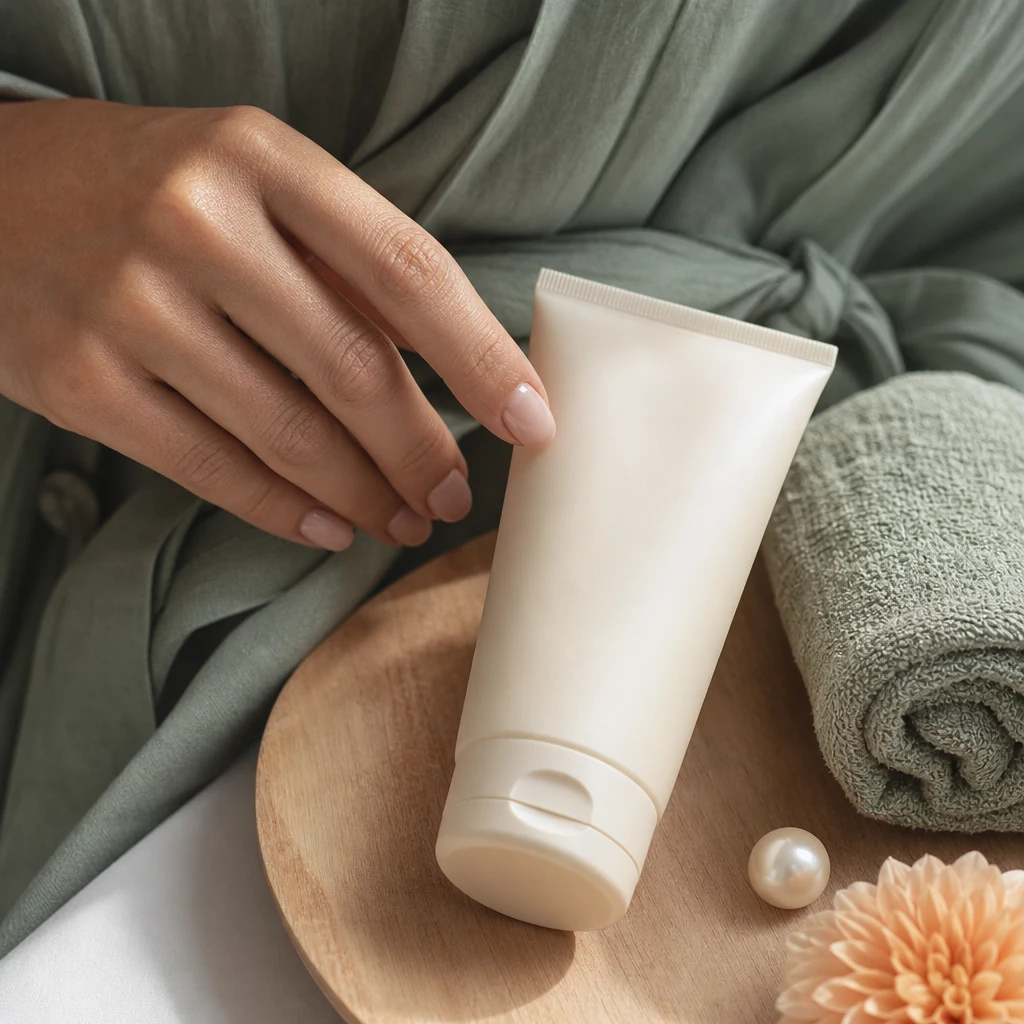
La Roche-Posay Anthelios Melt-In Milk SPF 60 Review: The Cult French Sunscreen for Face and Body
The chemical sunscreen that finally makes broad-spectrum SPF 60 feel like a moisturizer instead of a chore.
- Broad-spectrum SPF 60 with strong UVA protection
- Fragrance-free chemical formulation
- Milk-textured lotion — sinks in without white cast
- Water-resistant up to 80 minutes
- Works for both face and body from a single tube
Check the latest price and availability on Amazon.
View on Amazon →As an Amazon Associate, SkincareTopic earns from qualifying purchases.
Why We Recommend It
- Elegant lotion texture rare for high-SPF chemical sunscreens
- No white cast — works on medium to deep skin tones
- Fragrance-free formulation suitable for sensitive skin
- Strong UVA protection via Cell-Ox Shield technology
- Works under makeup without pilling or greasiness
Consider Before Buying
- Chemical filters (not for users who prefer mineral-only)
- Contains homosalate and octocrylene (some users avoid these)
- Higher price than drugstore SPF options
- 80-minute water resistance is standard, not exceptional
Key Ingredients
Product note: This review is for general shopping and skincare education only. Product fit varies by skin type, pregnancy or breastfeeding status, medications, allergies, and diagnosed conditions. For persistent acne, rosacea, eczema, melasma, hair loss, reactions, or pregnancy-related concerns, ask a dermatologist, OB-GYN, or other licensed clinician before relying on an over-the-counter product.
La Roche-Posay’s Anthelios line has cult status in skincare circles, and Anthelios Melt-In Milk SPF 60 is arguably the most-recommended entry in the U.S. formulation. It sits in an unusual sweet spot — chemical filter protection at SPF 60, in a lotion texture that feels like a lightweight body moisturizer, sold at a price point that’s expensive but not luxury. For users who want broad-spectrum protection without the cast, chalkiness, or reformulation-required greasiness of most high-SPF products, this is often the answer.
Note before we start: the European Anthelios line uses filters (Mexoryl SX, Tinosorb S) that aren’t currently approved in the U.S. by the FDA. The U.S. Anthelios Melt-In Milk uses a different filter combination. It’s still an excellent sunscreen — but if you’ve heard cult-level praise from European skincare enthusiasts, be aware that the U.S. version isn’t quite the same formula.
## What it is
Anthelios Melt-In Milk SPF 60 is a chemical (organic filter) sunscreen in a milk-textured lotion, marketed for both face and body use. It comes in 3oz and 5oz tubes, with the 5oz size offering better value per ounce.
**Broad-spectrum SPF 60.** Protects against both UVB (the burn-and-cancer wavelengths) and UVA (the aging-and-DNA-damage wavelengths).
**Cell-Ox Shield technology.** La Roche-Posay’s proprietary blend of UV filters and antioxidants designed to protect against both direct UV damage and the secondary oxidative damage that UV exposure creates.
**Chemical (organic) filters.** The active ingredients are:
– Avobenzone 3% (strong UVA protection)
– Homosalate 10.5% (UVB filter)
– Octisalate 5% (UVB filter, stabilizer)
– Octocrylene 10% (UVB and UVA-II filter, stabilizer for avobenzone)
**Water-resistant up to 80 minutes.** Standard water-resistance rating, not exceptional. Reapply after swimming or sweating.
**Fragrance-free.** No added fragrance, making it appropriate for sensitive skin. Some users detect a very faint chemical-filter scent — this fades within a minute.
**Non-comedogenic.** Formulation designed to not clog pores. Generally safe for combination or dry-oily skin; for very oily or acne-prone skin, the Anthelios Clear Skin variant is a better fit.
**Fragrance-free, paraben-free, oxybenzone-free.** Free of several common irritants and controversial ingredients.
## Who this is for
**Daily face and body sunscreen.** The main use case. One tube for face and body simplifies the routine.
**Users with medium to deep skin tones.** No white cast, no ashiness. Works across a wide range of skin tones.
**Chemical-filter comfortable users.** If you’re fine with chemical filters and want an elegant lotion texture, this is one of the best in category.
**Sensitive skin (with tolerance for chemical filters).** Fragrance-free formulation minimizes non-filter irritation triggers.
**Users of makeup.** Sinks in without residue, layers under primer and foundation.
**Beach and outdoor days.** 80-minute water resistance handles most swimming and moderate sweat.
**Dry to normal skin.** The lotion texture is emollient enough to layer as its own moisturizer for many users.
**Visible-aging routines.** Strong broad-spectrum UVA protection is the single most important visible-aging product in a routine.
Who this **isn’t** the best pick for:
– Very oily or acne-prone skin — Anthelios Clear Skin Dry Touch is better.
– Users avoiding chemical filters — choose a mineral option like EltaMD UV Physical.
– Users avoiding homosalate or octocrylene (personal preference; not safety-driven).
– Ultra-budget shoppers — under $10 alternatives exist if you can accept less elegant texture.
– Reef-strict travelers — contains filters not classified as reef-safe.
## Key ingredients
**Avobenzone (3%).** The primary UVA filter in most U.S. chemical sunscreens. Provides broad UVA-I coverage (long-wavelength UVA responsible for deep skin damage). Requires stabilizers because avobenzone photodegrades on its own — La Roche-Posay pairs it with octocrylene and octisalate for stability.
**Homosalate (10.5%).** UVB filter. Some users prefer to avoid it based on cumulative-exposure concerns. Well-tolerated in cosmetic use.
**Octisalate (5%).** UVB filter and avobenzone stabilizer. Also improves the overall texture of the sunscreen.
**Octocrylene (10%).** UVB and UVA-II filter. Photostabilizer for avobenzone. Some users avoid it based on skin-sensitization concerns for a small minority of users, though most tolerate it fine.
**Vitamin E (tocopherol).** Antioxidant that supports the Cell-Ox Shield claim — protects against oxidative damage from UV.
**Glycerin.** Humectant that adds a light moisturizing effect.
**PEG-based emulsifiers.** Contribute to the milk-like texture and clean application.
The chemical filter combination is well-selected for broad-spectrum protection. If you’re comparing sunscreens on protection level alone, this ranks near the top of U.S.-available options.
## How it performs
**Broad-spectrum protection.** SPF 60 UVB rating with strong UVA-I coverage. Real-world result: minimal to no tanning through the sunscreen with adequate reapplication.
**No white cast.** Chemical filters don’t produce the mineral-sunscreen white cast. Suitable for all skin tones.
**Elegant lotion texture.** Sinks in within 60-90 seconds. Doesn’t feel greasy on skin.
**Works under makeup.** Wait 5 minutes after application, then apply primer or foundation. Doesn’t pill or roll off.
**Handles moderate sweat.** 80-minute water resistance means reapplication after swimming or heavy exercise, but light sweat during a normal day doesn’t compromise protection.
**Slightly emollient finish.** For dry skin users, can serve as its own moisturizer layer. For oily skin, may feel slightly heavy — consider Anthelios Clear Skin instead.
**Doesn’t sting eyes.** Rare for chemical sunscreens; Anthelios manages this well through formulation choices.
**Long-wearing.** Doesn’t break down under normal daytime conditions. Reapply every 2 hours during direct sun exposure per standard SPF guidance.
**Value per tube.** 5oz used for face-plus-body daily lasts 6-8 weeks. Face-only use lasts 3-4 months.
## How to use it
**Face-only application:**
1. **Complete morning skincare.** Cleanse, treat, moisturize.
2. **Wait 3-5 minutes** for moisturizer to fully absorb.
3. **Dispense two-finger-lengths** of sunscreen onto fingertips.
4. **Apply evenly** across face, ears, and neck. Don’t skip the eyelids or hairline.
5. **Wait 5 minutes** before applying makeup.
6. **Reapply every 2 hours** in direct sunlight. Powder sunscreen or a stick reapplication is easier over makeup.
**Body application:**
1. **Apply generously.** For arms, legs, and torso, use roughly a shot-glass worth (1 fl oz) for full body.
2. **Rub in thoroughly** to prevent streaking.
3. **Reapply every 80 minutes** after swimming or sweating.
**Amount matters more than SPF number.** A common failure mode is applying half the recommended amount. Half the amount means you’re getting roughly half the SPF protection you paid for. Apply generously.
**Reapply.** SPF 60 does not mean “one application lasts all day.” UV exposure, sweat, water contact, and normal skin turnover all reduce protection over 2-3 hours.
## Best paired with
**Vitamin C serum (before sunscreen).** Antioxidant boost that complements UV protection. Apply first, wait, then sunscreen.
**Niacinamide serum (before sunscreen).** Supports skin barrier and reduces sun-induced pigmentation risk.
**Hydrating toner or serum (before).** Adds base hydration.
**Ceramide moisturizer (before sunscreen if needed).** Only if you have dry skin — this sunscreen is emollient enough to skip moisturizer for many users.
**Retinoid (evening, not this same time).** Retinoids and daily SPF are the two most effective visible-aging pillars.
**After-sun body lotion.** For beach or long outdoor days, replenish with an aloe or hyaluronic acid-based body lotion.
## Skin-type suitability
| Skin type | Fit | Notes |
|—|—|—|
| Normal | Excellent | Primary use case |
| Dry | Excellent | Emollient enough to serve as moisturizer layer |
| Sensitive | Very good | Fragrance-free; some users react to chemical filters |
| Mature | Excellent | Strong UVA protection is visible-aging priority |
| Combination | Very good | Adjust amount for oilier T-zone |
| Rosacea-prone | Good | Fragrance-free helps; chemical filters vary by user |
| Oily | Good | Consider Anthelios Clear Skin for oilier skin |
| Acne-prone | Good | Non-comedogenic but relatively rich |
| Melasma-prone | Excellent | Strong UVA is critical for melasma control |
| Very deep skin tones | Excellent | No white cast, no ashiness |
## Worthy alternatives
**EltaMD UV Clear SPF 46** — around $41. Facial-focused with niacinamide. Best for oily, acne-prone, or sensitive facial skin.
**Supergoop Unseen Sunscreen SPF 40** — around $38. Primer-like texture, invisible finish. Face-only.
**CeraVe Hydrating Mineral Sunscreen SPF 30** — around $15. Mineral option with ceramides. Better for very sensitive skin.
**La Roche-Posay Anthelios Clear Skin Dry Touch SPF 60** — around $23. Same brand for oily/acne-prone skin. Matte finish, oil-control formula.
**La Roche-Posay Anthelios Ultra Light Fluid SPF 60** — around $37. Face-specific version with ultra-light texture. Alternative for face-only use.
**Neutrogena Ultra Sheer Dry-Touch SPF 100+** — around $12. Budget option with strong protection. Less elegant texture.
**Beauty of Joseon Relief Sun Rice + Probiotics SPF 50+** — around $18. Korean chemical sunscreen with different (unapproved-in-U.S. debate) filters. Very elegant texture.
**Australian Gold Botanical SPF 50** — around $15. Mineral face-and-body option. Slight tint offsets cast.
## Bottom line
**Editorial Rating: 4.7 / 5**
La Roche-Posay Anthelios Melt-In Milk SPF 60 is the sunscreen that broke the “high SPF means bad texture” trade-off for a generation of skincare-focused users. Broad-spectrum SPF 60 in a lotion texture that sinks in without cast, layers under makeup, and works for face and body from one tube. That combination is rare.
At $26-32 for a 5oz tube that lasts 6-8 weeks of face-plus-body use, it’s not the cheapest option — but for the quality of finish, it’s earned its cult status. If you’ve been avoiding daily sunscreen because everything you tried felt heavy, greasy, chalky, or made you look ashy, this is worth trying.
Two caveats. First, the U.S. formulation isn’t the same as the European Anthelios — European filters like Mexoryl SX and Tinosorb S aren’t currently approved by the FDA. If you’ve heard cult praise from European users, know that the U.S. version is still very good, just not identical. Second, this uses chemical filters — if you specifically prefer mineral, look at EltaMD UV Physical or CeraVe Hydrating Mineral instead.
For most users seeking daily broad-spectrum protection with a texture that doesn’t feel like a compromise, Anthelios Melt-In Milk SPF 60 remains one of the strongest picks in U.S. skincare. Cult status earned.
Anthelios Melt-In Milk SPF 60 is the reason so many skincare-obsessed users switched away from mineral sunscreens for daily use. The chemical filter combination delivers strong broad-spectrum protection in a lotion texture that sinks in cleanly with no white cast. It's not the cheapest option, and the chemical filters won't suit everyone, but for face-plus-body daily wear, few sunscreens match this level of finish and protection. Cult status is deserved.
View on Amazon →Prices and availability current on Amazon. As an Amazon Associate we earn from qualifying purchases.