

Editorial note: This article is for general skincare education only. It does not diagnose, treat, or replace advice from a dermatologist, OB-GYN, or other licensed clinician. If you are pregnant, breastfeeding, using prescription medications, or dealing with persistent or severe symptoms, confirm product and ingredient choices with your healthcare provider.
In 2016, Differin became the first prescription-level retinoid available without a prescription in the United States. It cost $15 at any drugstore. Almost a decade later, many adult women dealing with persistent breakouts still don’t know it exists — or don’t know how to use it correctly.
Differin is one of the genuine best buys in adult skincare. It is used for acne-prone skin, fades post-acne dark spots, and improves skin texture and fine lines. Here’s how to use it properly.
What Differin actually is
Differin is the brand name for adapalene 0.1% — a topical retinoid (vitamin A derivative) originally developed in the 1990s. It belongs to the same family as tretinoin (Retin-A) and isotretinoin (Accutane), but with a meaningfully different chemical structure that produces specific benefits.

It’s been available by prescription worldwide since the 1990s. The FDA approved over-the-counter sales in 2016, making it the first retinoid available without a prescription in the United States. Generic adapalene 0.1% gel is now available at every major drugstore for under $20.
What makes adapalene different from other retinoids:
- More targeted action. Adapalene binds selectively to specific retinoic acid receptors that regulate skin cell turnover, while having less effect on the receptors that mediate the irritation other retinoids cause.
- Better stability. Adapalene is photostable (doesn’t degrade in sunlight) and chemically stable in combination with most other ingredients. Tretinoin breaks down in light and conflicts with several common skincare ingredients.
- Less irritation. Studies consistently show adapalene causes less peeling, redness, and stinging than equivalent doses of tretinoin or strong retinol.
- Comparable efficacy for acne. Head-to-head trials show adapalene 0.1% works as well as tretinoin 0.025-0.05% for acne, with substantially better tolerance.
What Differin does
The mechanism, in plain terms: Differin tells your skin to make new cells faster and shed old cells more efficiently. This has cascading effects:
Prevents new breakouts. The pores that develop acne usually start with a “microcomedone” — a microscopic plug of dead cells and oil that doesn’t show on the surface yet. Adapalene accelerates clearance of these microcomedones before they become visible blackheads, whiteheads, or inflamed pimples. This is why retinoids are considered the most effective preventive acne treatment.
Resolves existing breakouts faster. The same cell turnover mechanism helps existing pimples cycle through and resolve more quickly.
Fades post-acne dark spots (post-inflammatory hyperpigmentation, or PIH). The brown marks left behind after pimples heal — which often last longer than the pimple itself — fade significantly faster with adapalene use.
Improves skin texture. Smoother surface, reduced visibility of pore size, more even tone.
Reduces fine lines. Adapalene stimulates collagen production similarly to other retinoids. The visible-aging benefits aren’t its primary marketing claim, but they’re real and well-documented in research.
Helps with hyperkeratotic conditions. Keratosis pilaris (the bumpy “chicken skin” on arms), some forms of mild acne scarring, and rough skin texture in general all respond to adapalene.
Who Differin is for
Excellent fit
- Adults with persistent breakouts in their 30s, 40s, or 50s
- Anyone with hormonal acne pattern (jawline, chin, lower cheek breakouts)
- Women dealing with post-acne dark spots that won’t fade
- First-time retinoid users who want to ease into the category (adapalene is gentler than retinol or tretinoin)
- People with rough skin texture or stubborn blackheads
- Anyone considering visible-aging benefits but daunted by stronger retinol products
Maybe not the best fit
- Severe cystic acne that requires oral medication — see a dermatologist
- Pregnant or breastfeeding women — like all retinoids, avoid during pregnancy and breastfeeding
- Very dry or eczema-prone skin — may worsen dryness; consider azelaic acid as an alternative
- People already on prescription tretinoin or another retinoid — pick one, don’t combine
- People with rosacea — retinoids can sometimes trigger rosacea flares; discuss with a dermatologist
How to start Differin without destroying your skin
Almost every Differin failure story is actually a too-fast-start story. The introduction protocol matters enormously.
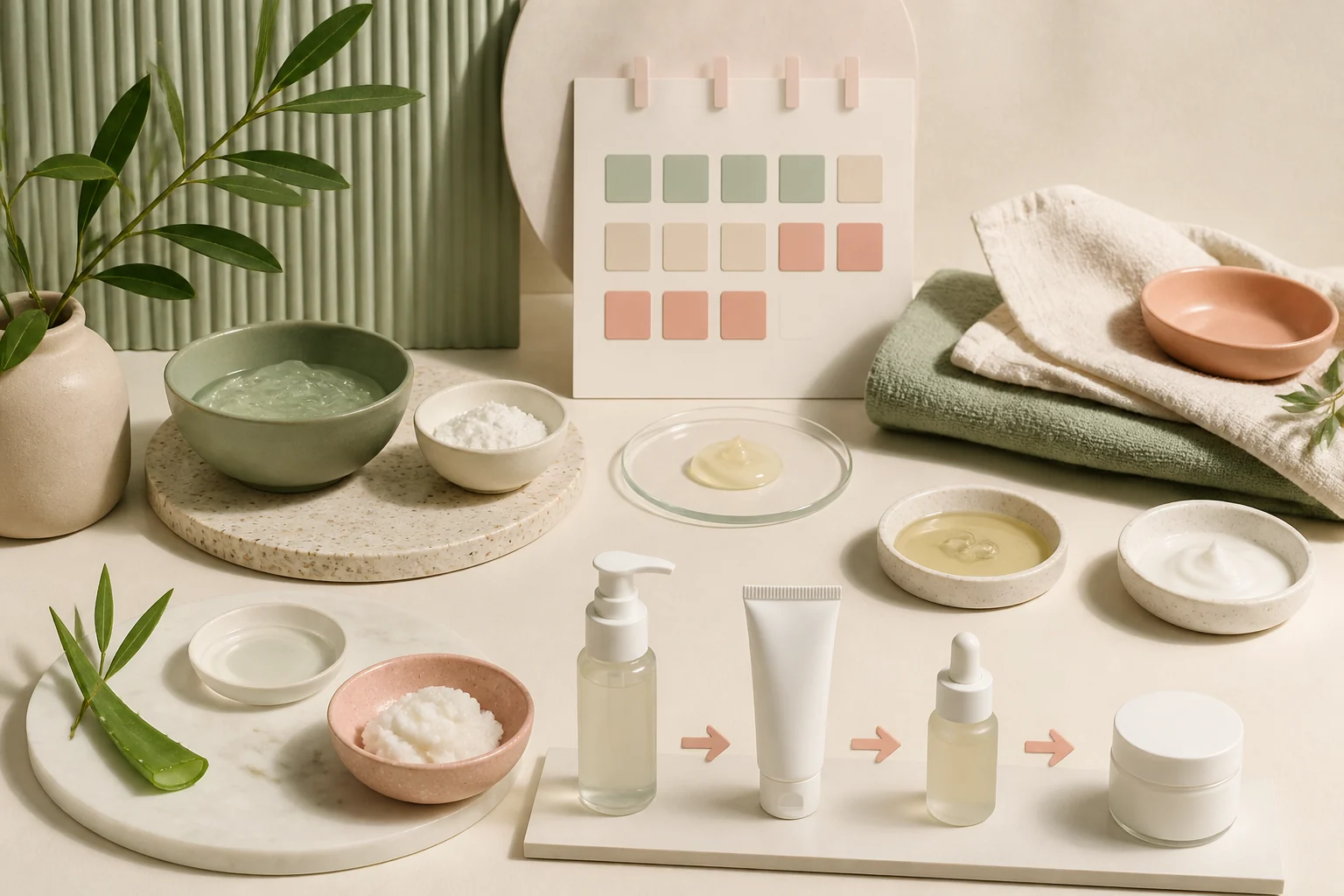
The 12-week introduction
Week 1-2: Apply once per week. Pea-sized amount to entire face (avoid eyes, corners of mouth, and the crease around the nostrils). Apply at night on dry skin. Wait 15-30 minutes after washing your face. Follow with moisturizer.
Week 3-4: Twice per week, on non-consecutive nights (e.g., Sunday and Wednesday).
Week 5-6: Three times per week.
Week 7-9: Every other night.
Week 10-12: Daily, if tolerated. Many users find every-other-day is sufficient long-term.
If you hit irritation at any stage (persistent redness, stinging, peeling that doesn’t resolve), drop back to the previous frequency for another 2 weeks before progressing.
Application technique
- Wash your face with a gentle cleanser
- Wait 15-30 minutes until skin is completely dry. This is critical. Damp skin absorbs adapalene more aggressively and triggers more irritation.
- Squeeze a pea-sized amount total for the entire face. More is not better.
- Dot small amounts on forehead, cheeks, chin, and nose
- Gently spread evenly across the face, avoiding the eyelids, the corners of the mouth, and the deep crease where the nostrils meet the cheek
- Wait 5-10 minutes for absorption
- Apply moisturizer generously on top
The “sandwich method” for sensitive skin
If your skin is sensitive, apply moisturizer BEFORE Differin in addition to after:
- Wash, wait until dry
- Apply a thin layer of fragrance-free moisturizer (CeraVe PM works well)
- Wait 5 minutes
- Apply Differin (pea-sized)
- Wait 5 minutes
- Apply another layer of moisturizer over the top
This reduces the concentration that reaches your skin and dramatically improves tolerance. Most users can drop the first moisturizer layer after 2-3 months when their skin has adjusted.
What to expect (the realistic timeline)
Weeks 1-2: Mostly nothing visible
You might notice slight dryness or mild flaking. No improvement in acne yet.
Weeks 3-6: The purge (often)
This is the make-or-break period. As Differin accelerates cell turnover, microcomedones that were brewing under the surface come up. Many users see an INCREASE in breakouts during weeks 3-6 — sometimes significant. This is the famous “skin purging” phenomenon.
Counterintuitively, this means the product is working. The breakouts that happen during this period were going to happen anyway over the next few months; you’re just clearing them faster. Persist through this phase — quitting now wastes everything you’ve already done.
Purging that lasts more than 8 weeks, however, is not purging — it’s irritation. Pause and reassess if it’s still escalating after 8 weeks.
Weeks 7-12: Skin starts looking calmer
Breakout frequency drops. Existing dark spots from old breakouts begin to fade. Skin starts looking smoother.
Months 4-6: Substantial improvement
Most users see meaningful reduction in active breakouts, significantly faded post-acne marks, and overall improved skin tone and texture.
Months 6+: Compounding effect
Anti-aging benefits become more visible. Skin maintains the improvements as long as you keep using Differin. Stopping use typically allows breakouts to return within 8-12 weeks.
What to use with Differin
Pair well
- Gentle cleansers — Cetaphil, CeraVe Hydrating, La Roche-Posay Toleriane
- Ceramide-based moisturizers — CeraVe Moisturizing Cream, CeraVe PM Lotion, Vanicream
- Hyaluronic acid serums — for added hydration during the adjustment period
- Niacinamide — reduces inflammation, supports barrier, complements anti-acne effect
- Sunscreen (always) — especially important. Mineral or chemical, but daily SPF 30+ is required.
Use with caution
- Vitamin C — fine, but use vitamin C in the morning and Differin at night
- Salicylic acid — usable, but only on non-Differin nights, and only after your skin has fully adjusted (typically 3+ months in)
- Benzoyl peroxide — historically considered incompatible with retinoids (could degrade them), but adapalene specifically is one of the few retinoids that’s actually stable with benzoyl peroxide. Combination products (Epiduo) exist. Still, separating by time-of-day (BP morning, adapalene night) is common practice.
Avoid combining
- Strong AHA/BHA peels
- Physical exfoliating scrubs
- Other retinoids (including OTC retinol products)
- Waxing or threading on the same day
Common mistakes to avoid
- Applying too much. A pea-sized amount is enough for the entire face. More product equals more irritation without more benefit.
- Applying to damp skin. Triggers significantly more irritation. Wait 15-30 minutes after cleansing.
- Skipping moisturizer. Adapalene needs barrier support. A good moisturizer reduces 70%+ of the side effects.
- Daily use from day one. The single most common cause of “I can’t tolerate Differin” complaints.
- Quitting during the purge. The increased breakouts at weeks 3-6 are not failure — they’re the mechanism. Persist.
- Forgetting sunscreen. Retinoid-treated skin is more vulnerable to UV damage. Daily SPF is mandatory.
- Combining with retinol. Pick one. Stacking retinoids doesn’t compound benefits — just irritation.
Differin vs prescription tretinoin
Common question: should you stick with Differin or move to prescription tretinoin?
| Differin (adapalene 0.1%) | Tretinoin (prescription) | |
|---|---|---|
| Cost | $15-20 per tube | $30-80 per month with insurance; $15-50 via telehealth |
| Strength | Equivalent to ~0.025% tretinoin | 0.025% / 0.05% / 0.1% available |
| Tolerance | Easier — most users tolerate adapalene better | Harder — more irritation per dose |
| Speed of results | Visible improvement at 8-12 weeks | Slightly faster, especially at higher concentrations |
| Acne efficacy | Excellent — comparable to tretinoin | Excellent |
| Anti-aging | Real but secondary | Best-studied for visible-aging |
| Stability | Excellent — photostable | Light-sensitive — degrades in sunlight |
For most adults dealing with acne: Differin first. If after 6 months you’ve fully tolerated daily use and want more aggressive visible-aging effects, prescription tretinoin is the next step. Many dermatologists keep their patients on Differin indefinitely because it works and tolerance is better.
Side effects and when to worry
Normal and expected
- Mild dryness or flaking in the first few weeks
- Pink tinge after application that fades within an hour
- Slight increased sensitivity to sun (mandatory sunscreen handles this)
- Brief stinging on application
- “Skin purging” in weeks 3-6 — increased breakouts that subsequently resolve
Not normal — pause and reassess
- Sustained burning that doesn’t subside within minutes
- Persistent severe redness lasting hours
- Weeping or open areas
- Significant swelling
- New breakouts that continue to worsen past week 8
- Eczema-like rash anywhere on your face
If you experience these, pause Differin, repair the skin barrier for 2-4 weeks with ceramide moisturizer only, and either restart at lower frequency or consult a dermatologist.
When to see a dermatologist
- Severe cystic or nodular acne — likely needs oral medication
- Acne that doesn’t improve after 3 months of consistent Differin use
- Persistent scarring (textural, not just dark spots)
- Hormonal acne pattern in adult women that doesn’t respond to topicals — may benefit from oral spironolactone or hormonal management
- If interested in prescription tretinoin or combination treatments
- Any concerns about whether retinoids are right for your skin condition
Frequently asked questions
Differin Gel or Differin Adapalene Cream — which is better?
The original Differin Gel (0.1%) is what’s recommended for most users. The cream formulation (when available) is sometimes used for very dry skin, but the gel formulation is the better-studied option. Generic adapalene 0.1% gel from drugstore brands is identical to brand-name Differin.
Can I use Differin while breastfeeding?
Most dermatologists recommend avoiding all retinoids during breastfeeding, including Differin. The conservative approach is to wait until breastfeeding ends. For acne during breastfeeding, azelaic acid is the recommended alternative.
Will Differin help with closed comedones (the small bumps under the skin)?
Yes. Closed comedones are essentially the visible form of the microcomedones that adapalene targets. Daily Differin use typically resolves them over 3-6 months.
Can I use Differin on my chest, back, or other body areas?
Yes — adapalene is sometimes prescribed off-label for chest acne, back acne (bacne), and even keratosis pilaris on the upper arms. Apply the same way: pea-sized per area, to dry skin, after cleansing, followed by moisturizer.
I’m 45 and using Differin — does it really help with wrinkles?
Yes, though more gradually than tretinoin. Studies show measurable improvement in fine lines, skin texture, and overall photoaging markers after 6+ months of consistent adapalene use. The benefits are real even if they’re slower than dedicated visible-aging retinoid treatments.
Should I apply Differin around my eyes?
Generally not on the eyelid itself or in the inner corner. The orbital bone area (the area under the eye on top of the bone) usually tolerates adapalene fine and benefits from the visible-aging effects.
What’s the difference between Differin and Epiduo?
Epiduo is prescription. It combines adapalene with benzoyl peroxide in one formulation. More aggressive than Differin alone. Useful for moderate-to-severe inflammatory acne.
The bottom line
Differin Gel (adapalene 0.1%) is one of the best low-cost, high-impact skincare products available. For adults dealing with breakouts, post-acne dark spots, or general signs of skin aging, it’s often the most effective single product you can add to your routine.
The keys to success are unglamorous: pea-sized amount, dry skin only, slow introduction over 12 weeks, generous moisturizer on top, daily sunscreen, and patience through the purge period at weeks 3-6.
Get past the first three months and Differin starts paying compound dividends. Most users who stick with it for a year find they’ve quietly resolved both the acne they came for and the skin aging concerns they didn’t think a $15 drugstore product could address.