

Editorial note: This article is for general skincare education only. It does not diagnose, treat, or replace advice from a dermatologist, OB-GYN, or other licensed clinician. If you are pregnant, breastfeeding, using prescription medications, or dealing with persistent or severe symptoms, confirm product and ingredient choices with your healthcare provider.
You catch yourself in the mirror in the second trimester and notice it: a darker shadow across your forehead, a patch above your upper lip, smudges on your cheeks. It wasn’t there a month ago. You’ve heard of melasma but never thought it would happen to you.
Up to 70% of pregnant women develop some degree of melasma. Most of them are caught off-guard by it. Most of them aren’t given a clear strategy to handle it — and most of the strategies they find online recommend ingredients that aren’t often discussed as lower-risk during pregnancy, but worth confirming with your clinician.
Here’s how melasma may help, what you can do about it during pregnancy, and what happens after the baby arrives.
What melasma is
Melasma is a condition of acquired hyperpigmentation — excess melanin production in defined patches of skin, almost always on sun-exposed areas of the face. The classic pregnancy distribution is called the “mask of pregnancy” or chloasma gravidarum:
- Centrofacial — across the forehead, cheeks, upper lip, and chin (most common)
- Malar — confined to the cheeks
- Mandibular — along the jawline (less common)
Melasma exists on a spectrum of depths in the skin:
- Epidermal melasma — pigment mostly in the upper skin layers. Usually appears as well-defined brown patches. Responds best to topical treatment.
- Dermal melasma — pigment deeper in the skin, in the dermis. Tends to look bluish-gray. Much harder to treat topically.
- Mixed melasma — both. The most common type, and the most complex to address.
A dermatologist can identify depth using a Wood’s lamp (a special UV light). Epidermal melasma typically becomes more pronounced under the lamp; dermal melasma doesn’t.
Why pregnancy triggers melasma
Three hormones drive pregnancy melasma:
Estrogen rises dramatically during pregnancy and binds to receptors on melanocytes (pigment-producing cells), upregulating melanin production.
Progesterone works similarly, with somewhat lower potency.
Melanocyte-stimulating hormone (MSH) also rises during pregnancy and directly stimulates melanin production.
Together, these hormones make melanocytes hypersensitive and overproductive. UV exposure — even modest, casual amounts — then triggers actual melanin synthesis and pigment deposition. The result is melasma.
Two other factors matter:
Visible light, not just UV. Research over the past decade has clarified that visible blue light (from sun and indoor lighting) also drives melasma. This is why melasma can darken even with diligent UV sunscreen use, if the sunscreen doesn’t address visible light.
Genetic predisposition. Melasma runs in families. Women whose mothers had it during pregnancy are more likely to develop it themselves. Fitzpatrick skin types III–V (medium to medium-dark complexions) are most prone.
What’s safe to use during pregnancy
Most of the standard melasma treatments — hydroquinone, tretinoin, kojic acid in some formulations — are off the table during pregnancy. What remains is genuinely useful, but has to be deployed strategically.
Mineral sunscreen, every day, generously, reapplied
This is the foundation. Without it, nothing else matters.
The requirements:
- Zinc oxide and/or titanium dioxide only (mineral filters)
- SPF 30 minimum, SPF 50 preferred
- Broad-spectrum (UVA + UVB)
- Tinted formulations containing iron oxides for visible light protection — this is meaningful for melasma specifically
- Applied generously (two finger-lengths for face and neck)
- Reapplied every 2 hours during sun exposure
Tinted mineral sunscreens that perform well for pregnancy melasma include EltaMD UV Elements Tinted, Colorescience Total Protection Face Shield SPF 50, Australian Gold Botanical Tinted, and Tower 28 SunnyDays Tinted.
Azelaic acid 15–20%
Azelaic acid is the prescription-level active ingredient that is widely used during pregnancy for melasma. Studies have shown it comparable to 4% hydroquinone for melasma treatment — without the absorption concerns that take hydroquinone off the table during pregnancy.
It works through multiple mechanisms: inhibiting tyrosinase (a key enzyme in melanin production), reducing melanocyte activity, and exerting anti-inflammatory effects.
Available over the counter at 10% (good starting concentration) or by prescription at 15–20% (Finacea). Most dermatologists who treat pregnant women with melasma prescribe Finacea 15% as the cornerstone of the routine.
Usage: apply a pea-sized amount to affected areas once or twice daily after cleansing and before moisturizer. Tingling for the first few minutes is normal. Build up gradually if you’re sensitive — every other day for the first 1–2 weeks, then daily.
Niacinamide 4–10%
Niacinamide reduces the transfer of pigment from melanocytes to surrounding skin cells. This is a different mechanism from inhibiting melanin production — it means even if your skin is making excess melanin, less of it actually shows up as visible darkening.
Studies have shown niacinamide reduces visible hyperpigmentation modestly over 8–12 weeks. As part of a stack with azelaic acid, vitamin C, and sunscreen, it adds meaningful benefit. Used alone, the effect is more modest.
Commonly discussed as lower-risk during pregnancy, but confirm concentration and use with your clinician. Pairs well with everything.
Vitamin C (L-ascorbic acid)
Topical vitamin C is an antioxidant that reduces UV-induced oxidative stress and inhibits tyrosinase as a secondary effect. It brightens overall skin tone and reduces the severity of new pigment formation.
For melasma specifically, vitamin C is less directly effective than azelaic acid, but it’s a useful supporting active. It also amplifies sunscreen’s protection when applied underneath.
10–20% L-ascorbic acid in the morning. Gentler derivatives (sodium ascorbyl phosphate, magnesium ascorbyl phosphate) for sensitive skin.
Glycolic acid (low concentrations)
Glycolic acid in low concentrations (3–7% in leave-on products) can improve cell turnover and gradually fade superficial pigmentation. Pregnancy-conscious at these low concentrations. High-percentage glycolic peels should be avoided.
Cysteamine
Cysteamine is a newer melasma active gaining traction in dermatology. It’s an antioxidant derived from coenzyme A that has shown efficacy comparable to hydroquinone in clinical trials. The pregnancy safety profile isn’t fully established, but it’s increasingly considered an option to discuss with a dermatologist.
What to avoid during pregnancy
- Hydroquinone. The gold-standard melasma treatment outside pregnancy. High systemic absorption makes it inappropriate during pregnancy. Discuss postpartum use with your derm.
- Tretinoin and other retinoids. Avoid all topical and oral retinoids.
- Kojic acid in high concentrations. Lower concentrations may be acceptable but recommendations vary by provider. Many dermatologists advise caution during pregnancy.
- Chemical peels above 30% acid concentration. Mild at-home glycolic acid is fine; in-office TCA or Jessner’s peels are not.
- Laser treatments and IPL. Avoid all energy-based treatments during pregnancy and breastfeeding. The lasers themselves are unlikely to harm a pregnancy, but heat and post-procedure inflammation can worsen melasma.
- Microneedling. Skip during pregnancy. Postpartum microneedling can be a useful adjunct.
Behavior matters as much as products
Topical treatments for melasma are slow and frustrating during pregnancy because the hormonal trigger continues. Most of the visible change during pregnancy comes from risk reduction — keeping new pigment from forming — rather than fading existing pigment.
Habits that help dramatically:
- Wear a wide-brimmed hat outdoors. A 4-inch brim provides genuine face shading and reduces sun exposure to melasma-prone areas. Cheap, effective, very underused.
- Avoid direct sun between 10 AM and 4 PM. If you can’t, seek shade and reapply sunscreen.
- Be aware of incidental sun. Driving with your left arm in the window. Walking to the mailbox in summer. Sitting near a sunny window at home. These accumulate.
- Wear sunglasses with UV protection. UV exposure to the eyes can trigger surrounding melanocyte activity.
- Avoid heat. Hot showers, saunas, hot yoga — heat itself can worsen melasma even without sun. This is harder advice to follow, but if you have severe melasma, reducing facial heat exposure helps.
A practical pregnancy melasma routine
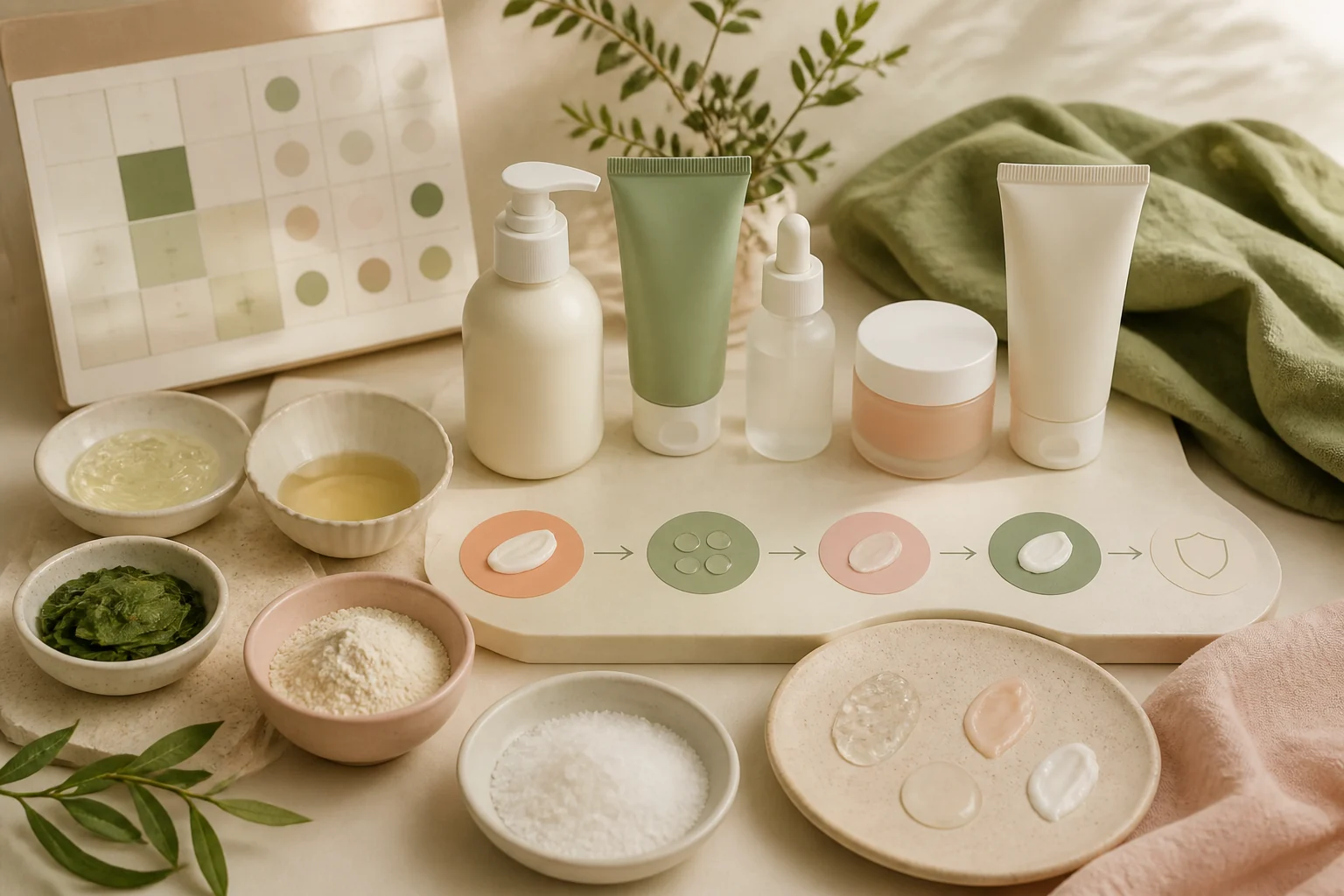
Morning
- Gentle cleanser
- Vitamin C serum (10–20% L-ascorbic acid or a gentler derivative)
- Niacinamide serum (5–10%) — optional, can layer with vitamin C
- Moisturizer
- Tinted mineral sunscreen SPF 50 — generously, reapply every 2 hours when outside
Evening
- Gentle cleanser (double-cleanse if wearing makeup or sunscreen)
- Azelaic acid 15% (prescription Finacea) or 10% over-the-counter — applied to areas with melasma
- Wait 5 minutes for absorption
- Moisturizer (with niacinamide if you want to add it)
- Optional: bakuchiol serum if you want to support overall skin renewal
Daily habits
- Hat outdoors
- Sunglasses
- Avoid peak sun
- Reapply sunscreen every 2 hours during sun exposure
What happens postpartum
The good news: most pregnancy melasma fades partially or fully after delivery. Estimates vary, but 50–80% of women see meaningful improvement within 6–12 months postpartum, especially with continued sun protection.
The factors that predict persistent melasma postpartum:
- Severe melasma during pregnancy
- Hormonal birth control after delivery (estrogen-containing methods can prolong melasma)
- Inadequate sun protection postpartum
- Dermal or mixed melasma rather than purely epidermal
- Multiple pregnancies (subsequent pregnancies often worsen the same melasma patterns)
- Genetic predisposition (family history)
If melasma persists significantly past 6 months postpartum, that’s the point at which most dermatologists will discuss prescription-level options: hydroquinone (often in a triple combination cream with tretinoin and hydrocortisone — Tri-Luma), tranexamic acid (oral or topical), Cysteamine, or in-office treatments like chemical peels and certain laser therapies.
While breastfeeding, the conservative approach is to continue with the pregnancy-conscious routine — azelaic acid, vitamin C, niacinamide, sunscreen — until breastfeeding ends. Then more aggressive options can be added.
When to see a dermatologist
- Melasma developing rapidly or unusually severe
- Melasma that’s affecting your quality of life or mental health (a real consideration — visible facial pigmentation can be psychologically difficult)
- Uncertainty about whether what you have is actually melasma versus other pigmentation conditions (post-inflammatory hyperpigmentation, lichen planus pigmentosus, drug-induced pigmentation)
- Postpartum persistence past 6 months
- Recurrence in subsequent pregnancies (a dermatologist-led plan early in the pregnancy can prevent severity)
Frequently asked questions
Will my melasma definitely go away after birth?
Not definitely, but probably yes — at least partially. Around 70% of women see significant improvement in the first year postpartum. The remaining cases tend to fade gradually with continued sun protection. A meaningful minority do experience persistent melasma that requires postpartum treatment to fully resolve.
Can I prevent melasma in a future pregnancy?
You can reduce severity significantly. The most useful strategy is starting strict sun protection from the moment you confirm pregnancy (or even before, if you’re trying to conceive). Many dermatologists also start patients on azelaic acid prophylactically in early pregnancy if they had melasma in a previous pregnancy.
Why is my melasma worse on one side of my face?
Almost always: driving. The left side of the face (in countries where the driver sits on the left) gets significantly more UVA exposure through the window. UV-protective film on car windows and consistent sunscreen on commute days reduces this asymmetry.
Is birth control causing my melasma postpartum?
It can. Estrogen-containing birth control methods (combination pills, the patch, the ring) can trigger or worsen melasma the same way pregnancy does. Progestin-only options (mini-pill, IUD, Depo, implant) generally don’t have this effect. If you have melasma and you’re starting birth control, this is worth discussing with your provider.
Can I use makeup to cover melasma?
Yes, and many women do. Tinted sunscreens already provide some coverage. For more, color-correcting concealers (peach or orange-toned for medium and dark skin tones) applied before foundation neutralize the darker patches. Long-wear foundations like Estee Lauder Double Wear, MAC Studio Fix, and Make Up For Ever HD provide good coverage.
What about the dark line on my stomach?
The linea nigra (dark line down the abdomen) is a separate form of pregnancy pigmentation. It almost always fades within a few months postpartum on its own and doesn’t require treatment.
The bottom line
Pregnancy melasma is common, frustrating, and largely manageable. The key actions are unglamorous but they matter: strict mineral sunscreen with iron oxides for visible light protection, applied generously and reapplied throughout the day. Add azelaic acid 10–15% as your primary active. Layer niacinamide and vitamin C for compounding effect. Wear a hat outdoors. Reduce sun exposure during peak hours.
Most pregnancy melasma improves dramatically postpartum, especially with continued sun protection. The remaining cases respond well to the broader toolkit of dermatology treatments available after pregnancy and breastfeeding.
The work you put in now — strict risk reduction during pregnancy — is what determines how severe and persistent your postpartum melasma will be. The women who emerge from pregnancy with the least melasma are not luckier; they’re more vigilant.