
Editorial note: This article is for general skincare education only. It does not diagnose, treat, or replace advice from a dermatologist, OB-GYN, or other licensed clinician. If you are pregnant, breastfeeding, using prescription medications, or dealing with persistent or severe symptoms, confirm product and ingredient choices with your healthcare provider.
If you shave most days and your skin is constantly red, bumpy, or irritated, it’s not just bad luck. Daily shaving is genuinely rough on your skin — and what you put on afterward makes a bigger difference than most men realize.
This guide covers what’s actually happening to your skin when you shave, why traditional aftershaves often make things worse, and what to use instead.
What shaving is commonly used for to your skin
When you drag a razor across your face, three things happen at once:

First, you cut hair — that’s the part you want.
Second, you remove a thin layer of skin cells along with the hair. Dermatologists call this layer the stratum corneum — it’s the outermost protective barrier of your skin, made up of dead skin cells held together by lipids (skin fats) that lock moisture in and irritants out. Shaving exfoliates this layer, which sounds fine in theory but means your skin temporarily loses some of its protective shield.
Third, you create microscopic damage across the shaved area — tiny abrasions, small inflammation, and exposed nerve endings. This is why freshly shaved skin stings, looks slightly red, and is more sensitive than non-shaved areas.
What you apply right after shaving determines how quickly your skin recovers and whether you develop the chronic irritation patterns — razor burn, ingrown hairs, persistent redness — that plague many men who shave daily.
Why traditional aftershave makes things worse
The classic “aftershave” — Old Spice, Aqua Velva, Brut, similar — is essentially fragrance mixed with denatured alcohol. The sting that men of previous generations associated with “feeling clean” is the alcohol drying out the skin and burning the freshly exposed nerve endings.
This made some sense in an era before bacteria-resistant blades and modern hygiene — alcohol kills bacteria that might infect the small cuts of shaving. But the cost is significant: alcohol-based aftershaves dry the skin barrier when it’s already vulnerable, prolonging recovery time and worsening overall skin reactivity over months and years of use.
If you’ve been using an alcohol-based aftershave for decades and now have chronically irritated, dry, or rough skin in the beard area — those things are connected.
What a post-shave moisturizer should actually do
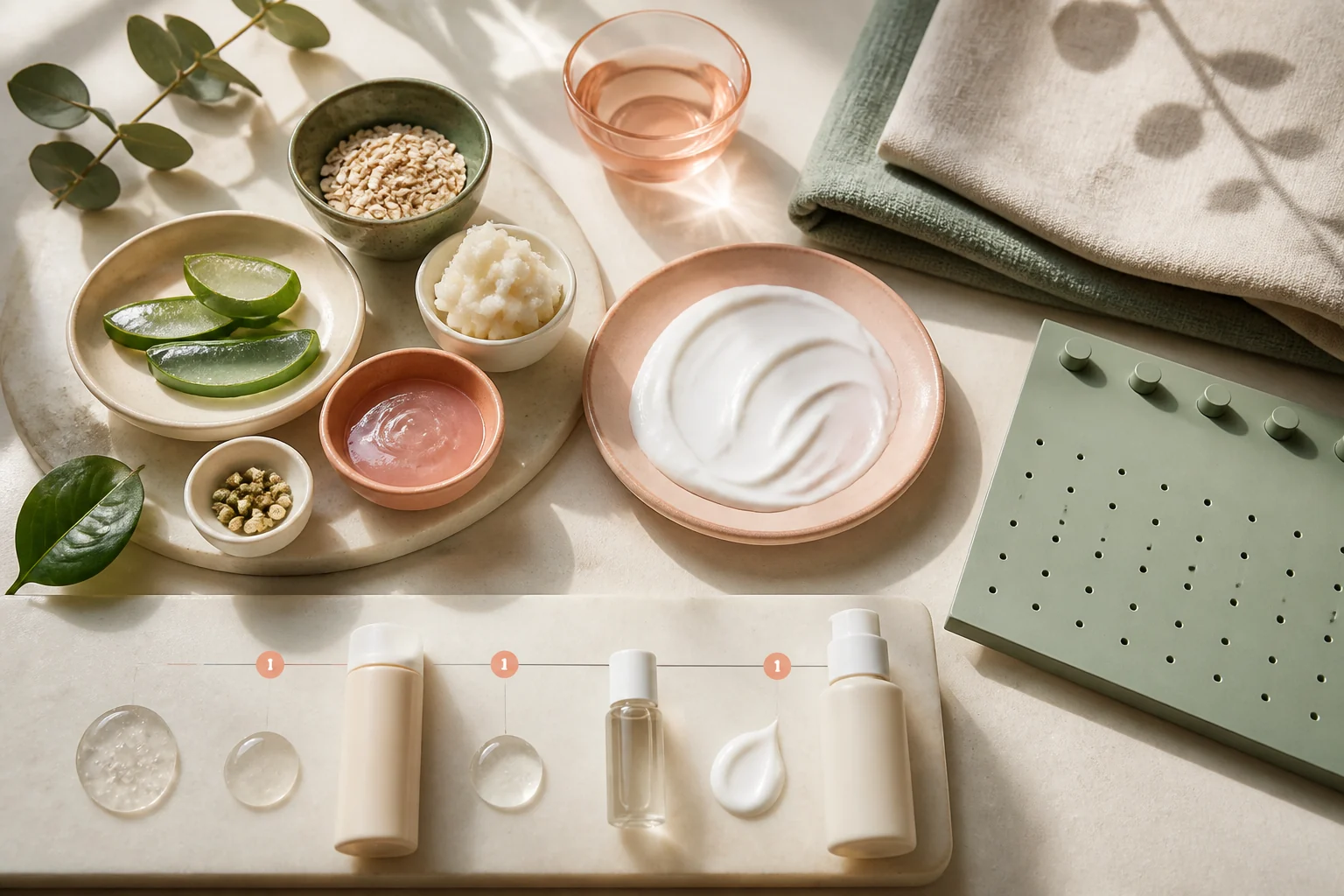
A proper post-shave product does the opposite of traditional aftershave: it replaces moisture, soothes inflammation, and supports the skin barrier so it can rebuild quickly. The goal is to leave the freshly shaved area calmer than untreated skin, not stingier.
The essentials it should provide:
Immediate hydration
Freshly shaved skin loses moisture faster than usual because the protective layer has been partially removed. Topical humectants — ingredients like glycerin, hyaluronic acid, and panthenol (also called provitamin B5) — pull water into the skin and hold it there. Within seconds of application, the tightness most men feel after shaving should ease.
Anti-inflammatory effect
The microscopic damage of shaving triggers low-grade inflammation. Calming ingredients reduce this:
- Niacinamide (vitamin B3) — supports the skin barrier and reduces redness
- Centella asiatica (sometimes labeled “cica” or “tiger grass”) — a plant extract with strong anti-inflammatory effects, used in wound healing for decades
- Allantoin — gentle soothing agent, helps skin recover
- Aloe vera — modest cooling and anti-inflammatory effect
- Bisabolol (from chamomile) — anti-inflammatory
Barrier repair
The skin barrier needs lipids (skin fats) to rebuild. Look for products containing:
- Ceramides — the lipids that hold skin cells together in the protective barrier. Topical ceramides directly replace what shaving stripped away.
- Squalane — a stable plant-derived lipid similar to your skin’s natural oils
- Shea butter — emollient, helps lock moisture in
Antibacterial effect (gentle, not aggressive)
You do want some antibacterial action — small cuts can get infected — but you don’t need alcohol. Gentler options:
- Tea tree oil at modest concentrations — mild antimicrobial
- Witch hazel (without added alcohol) — gentle antimicrobial and astringent
- Zinc oxide — mild antibacterial, also calming
Ingredients to avoid in post-shave products
- Denatured alcohol (alcohol denat, SD alcohol) high in the ingredient list
- Strong fragrance — adds nothing functional, increases irritation potential
- Menthol or eucalyptus in high concentrations — the cooling sensation feels nice for a few seconds but irritates skin
- Witch hazel that lists alcohol as a co-ingredient (most commercial witch hazels do)
Specific product recommendations
Organized by category.
Best basic post-shave balms (under $20)
- Cremo Cooling Post Shave Balm ($10) — niacinamide, aloe, glycerin, hyaluronic acid. No alcohol, light texture, mild cooling without irritation. Probably the best drugstore option.
- Nivea Men Sensitive Post Shave Balm ($8) — chamomile, vitamin E, glycerin. Lightweight, gentle, good for sensitive skin.
- Bulldog Original After Shave Balm ($10) — aloe, green tea, glycerin. Lightweight feel, vegan formulation if that matters to you.
- The Art of Shaving After-Shave Balm (Unscented) ($45) — pricier but well-formulated, fragrance-free version is gentle
For sensitive skin or chronic irritation
- La Roche-Posay Cicaplast Baume B5 ($17) — French pharmacy multi-purpose balm with madecassoside (centella extract) and panthenol. Genuinely good for the most reactive shaved skin.
- Avene Tolerance Control Soothing Skin Recovery Cream ($30) — for very reactive skin, virtually no ingredients to react to
- Skin1004 Madagascar Centella Light Cream ($23) — centella-focused, ideal for inflamed shaved skin
For dry skin and beard areas that need extra hydration
- CeraVe Moisturizing Cream ($18) — works as a post-shave balm too. Ceramides, hyaluronic acid, fragrance-free.
- CeraVe PM Facial Moisturizing Lotion ($16) — niacinamide and ceramides, light texture, ideal as a daily post-shave moisturizer
- La Roche-Posay Toleriane Double Repair ($25) — slightly more elegant, niacinamide and ceramides
For oily or acne-prone skin
- EltaMD Barrier Renewal Complex ($60) — peptides and ceramides without heaviness, works well on oily-prone shaved skin
- Neutrogena Sensitive Skin Liquid Cleansing Bar ($8) — fragrance-free, gentle, low-irritation cleansing for the actual shaving process
- The Ordinary Niacinamide 10% + Zinc 1% ($8) — apply this BEFORE moisturizer for compounding anti-inflammatory and sebum-regulating effect
How to use post-shave moisturizer correctly
The technique matters as much as the product:
Step 1: Rinse with cool water immediately after the last razor pass
Hot water dilates blood vessels and prolongs the post-shave redness. Cool to lukewarm water calms the skin faster.
Step 2: Pat dry with a clean towel
Don’t rub. Don’t use the same towel you used yesterday — bacterial contamination on towels can cause breakouts and irritation in shaved areas. Use a fresh towel or hand towel daily.
Step 3: Apply post-shave product while skin is still slightly damp
Apply a quarter-sized to nickel-sized amount of post-shave balm to your fingertips and spread evenly across the shaved area. Slightly damp skin absorbs the product better than fully dry skin. Don’t massage aggressively — gentle pat-and-spread.
Step 4: Wait a minute before adding anything else
If you’re using a separate moisturizer or sunscreen, wait about 60 seconds for the post-shave balm to absorb before layering anything else.
Step 5: Add sunscreen if it’s the morning
Freshly shaved skin is more vulnerable to UV damage. If you shave in the morning and go outside, sunscreen over your post-shave balm is essential.
Common shaving problems and how to solve them
Razor burn (redness, stinging, irritation after every shave)
Switch to: a sharper blade (replace at the first hint of dullness), more generous lather and longer pre-shave soak time, gentler post-shave product without alcohol. Within two weeks of switching, most razor burn cases resolve.
Ingrown hairs (small bumps where hair grows back under the skin instead of breaking through)
These are particularly common on the neck and along the jaw, and they’re worse in men with curly or coarse facial hair. Strategies:
- Salicylic acid pads (Stridex, $7) 2-3 times per week on affected areas — this is a beta-hydroxy acid that dissolves the dead skin cells trapping hairs underground
- Shave with the grain of your hair growth, not against it
- Don’t pull your skin taut while shaving — this lets the hair retract below the skin surface after shaving
- If chronic ingrowns persist despite these changes, switch to an electric razor or consider chemical hair removal (Magic Shave) on affected areas
Persistent post-shave breakouts
The combination of bacteria, oil, and microscopic shave wounds creates conditions where breakouts thrive. Solutions:
- Use a clean towel daily
- Wash your razor thoroughly between uses
- Try adding 2% salicylic acid to your routine 2-3 times per week (after cleansing, before moisturizing)
- Consider adapalene gel (Differin) at night — addresses both breakouts and overall skin texture
Dark spots in the beard area (post-inflammatory hyperpigmentation)
The brown marks that appear after irritated bumps and ingrowns heal. This is most common in men with medium to darker skin tones — sometimes called post-inflammatory hyperpigmentation by dermatologists. Strategies to fade them:
- Daily vitamin C serum in the morning (Timeless 20% Vitamin C, $30)
- Niacinamide serum (helps with both pigmentation and overall tone)
- Adapalene gel (Differin) at night — fades hyperpigmentation gradually
- Strict daily sunscreen — without this, pigmentation gets worse rather than better
Realistic timeline: 8-16 weeks of consistent use before visible fading; 4-6 months for substantial improvement.
Razor bumps (pseudofolliculitis barbae)
This is a specific condition more common in men with curly hair, where coiled hairs reenter the skin after shaving and cause persistent inflammatory bumps. If you have this:
- Consider growing a short beard for several weeks to let the skin heal
- When you do shave, use single-blade safety razors instead of multi-blade cartridges (multi-blade razors cut hair below skin surface, increasing ingrowing risk)
- See a dermatologist — prescription topicals (clindamycin lotion, hydroquinone cream for resulting darkness) are highly effective
Beard care for men with facial hair
If you have a beard, your post-shave routine needs different attention since you’re only shaving the edges and neck. Key points:
- The skin under a beard still needs moisturizing — beard hair doesn’t protect skin from drying out
- Beard oil applied to slightly damp beard skin (after showering) keeps both hair and skin healthy. Jojoba oil and argan oil are common bases.
- Where you shave to maintain beard edges (cheekbones, neckline), the same post-shave principles apply
- Wash your beard with a gentle face cleanser (not body wash, not bar soap), 2-3 times per week. Daily washing tends to dry the skin underneath.
Special situations
If you’ve just started shaving in your 40s or 50s
Sometimes men who never had heavy facial hair start needing to shave more regularly as testosterone patterns shift in middle age. Your skin isn’t used to it. Start gentle — every other day rather than daily, generous post-shave moisturizer, and patience as your skin adapts over 4-6 weeks.
If you’ve switched to an electric razor
Electric razors cause less mechanical irritation than blades but generate heat and friction. Use a post-shave moisturizer to compensate for the dryness. Many men find electric razors significantly better for sensitive skin or chronic ingrowns.
If you wet-shave with a safety razor (single blade)
This requires more skill but produces less irritation than multi-blade cartridges. The single blade cuts at the skin surface rather than below it, dramatically reducing ingrowns. Post-shave needs are usually milder.
Body shaving (chest, back, manscaping)
Same principles apply. Body skin is generally tougher than face skin, so post-shave moisturization is less critical — but if you shave the same area daily or near-daily, ingrown hairs and irritation become real problems. A salicylic acid body lotion (CeraVe SA Lotion, $18) applied 2-3 times per week prevents ingrowns and keeps the skin smooth.
When to see a dermatologist
- Chronic razor burn that doesn’t resolve with technique changes and gentle products
- Persistent ingrowns leading to scarring
- Razor bumps (pseudofolliculitis barbae) that significantly affect your appearance or comfort
- Dark spots in the beard area that don’t fade with topical treatment
- Any new growth, bump, or skin change that doesn’t seem like typical shaving irritation
- Suspected folliculitis (infected hair follicles) — looks like persistent yellow-headed pustules
Frequently asked questions
Can I just use my regular moisturizer as a post-shave product?
Yes. A good facial moisturizer (CeraVe PM, La Roche-Posay Toleriane Double Repair) works fine as post-shave. Dedicated post-shave balms tend to be slightly lighter and sometimes contain more anti-inflammatory ingredients, but a regular moisturizer is acceptable.
Why does my skin sting when I apply moisturizer after shaving?
If your moisturizer contains fragrance, alcohol, menthol, or active ingredients (acids, retinol), it’ll sting on freshly shaved skin. Switch to a fragrance-free, alcohol-free product. Even gentle moisturizers may sting briefly on heavily irritated shaved skin — usually resolves within seconds.
Should I use a moisturizer if I have oily skin?
Yes. Oily skin is often dehydrated underneath the oil, and shaving makes this worse. A light, oil-free moisturizer (Neutrogena Hydro Boost, CeraVe AM Lotion) provides hydration without heaviness. Skipping moisturizer because you’re oily actually tends to make oiliness worse — your skin overproduces oil to compensate for dryness.
What about pre-shave oil — is that important?
Pre-shave oil is helpful for very dry skin or coarse facial hair. It creates additional glide and softens the hair before shaving. Not essential for everyone. Jojoba oil or specifically formulated pre-shave oils (Cremo, The Art of Shaving) work.
How long until my skin is “trained” to handle daily shaving?
If you’ve been shaving daily for years, your skin has already adapted. If you’re newly shaving daily, expect 4-8 weeks of more sensitivity before your skin stabilizes. Throughout, use gentle products and proper technique.
Will daily shaving cause permanent damage?
Not if done correctly with proper post-shave care. Daily shaving with poor technique and harsh aftershaves can lead to chronic skin issues over decades. Daily shaving with sharp blades, proper preparation, and gentle moisturizing causes minimal cumulative damage.
The bottom line
A good post-shave routine takes about 30 seconds and makes the difference between skin that recovers quickly and skin that’s chronically irritated. Switch from alcohol-based aftershave to a fragrance-free balm with niacinamide, glycerin, or ceramides. Pair it with sharper blades, generous shaving cream, and cool-water rinses.
Cremo Cooling Post Shave Balm ($10) and Nivea Men Sensitive Post Shave Balm ($8) are the budget-friendly drugstore options. La Roche-Posay Cicaplast Baume B5 ($17) is the upgrade for sensitive or chronically irritated skin.
If you’ve been struggling with daily shaving irritation for years, switching post-shave products is one of the highest-impact, lowest-effort changes you can make. Most men notice meaningfully calmer skin within two weeks of switching from alcohol-based aftershaves to a proper moisturizing balm.
Your skin recovers from shaving 365 days a year. What you put on it matters.