 🔍 Hover to zoom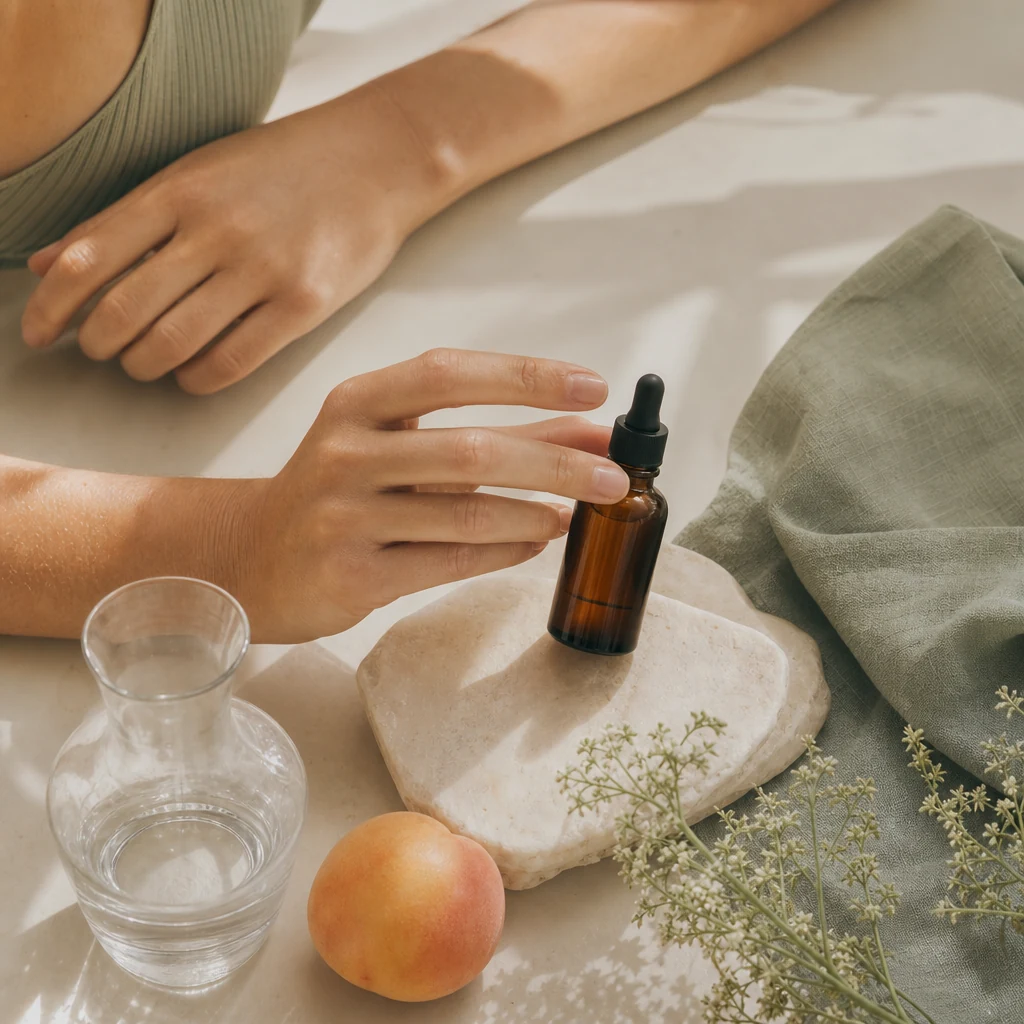
The Ordinary Alpha Arbutin 2% + HA Review: The Under-$10 Serum for Dark Spots
A tyrosinase-inhibiting brightener that fades dark spots without the irritation risk of hydroquinone.
- 2% Alpha Arbutin — a well-tolerated tyrosinase inhibitor
- Hyaluronic acid base for improved absorption
- Water-based serum, layers under any moisturizer
- Safe for all skin types including sensitive
- Often discussed as pregnancy-compatible alternative to hydroquinone
Check the latest price and availability on Amazon.
View on Amazon →As an Amazon Associate, SkincareTopic earns from qualifying purchases.
Why We Recommend It
- Effective for post-inflammatory hyperpigmentation and sun spots
- Under $10 for a 3-month supply — exceptional value
- Minimal irritation compared to other brightening ingredients
- Layers well with other actives
- Often discussed as pregnancy-compatible when hydroquinone and retinoids are off-limits
Consider Before Buying
- Slower results than hydroquinone (3-4 months vs 6-8 weeks)
- Doesn't fade deep dermal melasma reliably
- Requires strict daily SPF to maintain results
- Effects reverse without ongoing use
Key Ingredients
Product note: This review is for general shopping and skincare education only. Product fit varies by skin type, pregnancy or breastfeeding status, medications, allergies, and diagnosed conditions. For persistent acne, rosacea, eczema, melasma, hair loss, reactions, or pregnancy-related concerns, ask a dermatologist, OB-GYN, or other licensed clinician before relying on an over-the-counter product.
Hyperpigmentation — dark spots, sun spots, post-acne marks, uneven tone — is one of the most requested concerns in skincare. It’s also one of the hardest to address. Effective brighteners often carry real trade-offs: hydroquinone works but comes with irritation and legal restrictions in many countries. Vitamin C works but requires low pH formulations that can sting. Prescription options like tretinoin and hydroquinone-based creams work fast but are avoid during pregnancy unless your clinician says otherwise.
Alpha arbutin sits in a useful middle ground. It’s gentler than hydroquinone, doesn’t require the aggressive pH of vitamin C, and is safe for pregnant users. It’s slower than prescription options, but for mild to moderate hyperpigmentation with a consistent user, it delivers visible cosmetic changes — at under $10 for a 3-month supply.
## What it is
The Ordinary Alpha Arbutin 2% + HA is a water-based serum containing 2% alpha arbutin (a well-tolerated brightening ingredient) with a low-molecular-weight hyaluronic acid carrier. It comes in a 30ml dropper bottle.
**Alpha arbutin at 2% concentration.** Alpha arbutin is a hydroquinone-arbutin (a naturally occurring compound found in bearberry plants). At 2%, it’s near the ceiling of what’s stable in a serum formulation — higher concentrations don’t linearly increase efficacy and can trigger irritation.
**Sodium hyaluronate (HA) base.** Provides a light hydrating layer that also improves alpha arbutin absorption. HA carriers are cosmetically elegant and allow the serum to layer under any moisturizer.
**Water-based.** Unlike The Ordinary’s retinol serums (squalane-based), this one is water-based. It has no oily finish and layers easily with subsequent products.
**No supporting brighteners.** No vitamin C, no niacinamide, no kojic acid. This is a single-active isolation formula — build the rest of your brightening routine separately if you want combination therapy.
**Fragrance-free.** As with most of The Ordinary line, no added fragrance.
The pH is skin-neutral (around 5.5-6.0), meaning it doesn’t sting on application and is compatible with almost any other serum in your routine.
## Who this is for
**Post-inflammatory hyperpigmentation (PIH).** Marks left behind after acne, bug bites, minor cuts, or ingrown hairs. Alpha arbutin is especially effective here because PIH is surface pigmentation that responds well to tyrosinase inhibition.
**Sun spots (solar lentigines).** The scattered brown spots that develop after years of UV exposure, especially on cheeks, forehead, hands, and chest. Fades over 3-4 months of consistent use.
**Uneven skin tone.** General patchiness or dullness. Alpha arbutin evens the overall pigmentation without lightening skin below its natural baseline.
**Melasma (mild cases).** Melasma is a complex condition often requiring combination therapy (typically with sunscreen, hydroquinone, tretinoin, or dermatology procedures). Alpha arbutin alone won’t fix deep melasma, but it can support a broader protocol.
**Pregnancy or breastfeeding.** When hydroquinone and retinoids are off-limits, alpha arbutin is the go-to brightener. Safe for both pregnancy and lactation.
**Sensitive skin users.** Rarely triggers reactions. Users who can’t tolerate vitamin C or acid brighteners often do fine with alpha arbutin.
**Users of daily SPF.** Sunscreen isn’t optional with any brightener — new UV exposure creates new pigmentation faster than any serum can fade old pigmentation. This is where discipline matters.
**Users looking for an inexpensive entry point.** Under $10 for a 3-month supply. Nothing else in this efficacy tier is priced this low.
Who this **isn’t** the best pick for:
– Users who want fast results — plan for 3-4 months minimum.
– Deep dermal melasma without a broader treatment plan.
– Users unwilling to wear daily SPF (this won’t work without it).
– Users with hormonal-driven pigmentation without addressing the hormones.
## Key ingredients
**Alpha Arbutin (2%).** A hydroquinone glucoside naturally derived from bearberry. In skin, it slowly hydrolyzes to release hydroquinone at very low local concentrations, which inhibits tyrosinase — the enzyme that catalyzes the first step of melanin synthesis. The slow release is why alpha arbutin is gentler than direct hydroquinone: same mechanism, controlled dose.
The distinction between alpha arbutin (the α isomer) and beta arbutin matters. Alpha arbutin is more stable and more effective at similar concentrations — most quality brightening serums specify alpha.
**Sodium Hyaluronate.** Low-molecular-weight hyaluronic acid. Attracts water to skin (humectant effect) and provides a light carrier for the alpha arbutin. Not a “brightener” itself, but supports formulation stability and delivery.
**Propanediol.** Solvent and skin-conditioning agent. Contributes to the water-based texture without irritation.
**Phenoxyethanol and other preservatives.** Standard preservative system for water-based formulas.
That’s essentially the entire ingredient story. As with all The Ordinary products, the formulation is deliberately minimal — you’re buying alpha arbutin, not a hybrid product.
## How it performs
**Real brightening effects over months.** Expect visible fading of PIH at 6-10 weeks, sun spots at 3-4 months, general tone improvement at 3-4 months. Slower than prescription options; faster than doing nothing.
**Doesn’t lighten below baseline.** Alpha arbutin normalizes hyperpigmented areas back toward your natural tone. It doesn’t bleach or over-lighten the way aggressive hydroquinone protocols sometimes do.
**No irritation for most users.** Even for users sensitive to vitamin C or acids, alpha arbutin is typically well-tolerated. If irritation does occur, it’s usually the HA base or the propanediol, not the arbutin itself.
**Layers well.** Water-based, no oily finish, plays well with virtually any moisturizer, sunscreen, or additional serum.
**No photosensitivity.** Unlike some brighteners, alpha arbutin doesn’t increase UV sensitivity. That said, sunscreen is still required — without it, new UV-driven pigmentation forms faster than this fades old pigmentation.
**No pH sensitivity.** Skin-neutral pH means it’s compatible with almost any routine. Use with vitamin C (in the same session or alternate) without concern.
**Effects require maintenance.** Discontinue the serum, and pigmentation gradually returns to its pre-treatment level over 4-8 months. Ongoing daily use is required to maintain results.
**Value per bottle.** 30ml at 4-6 drops per session, used once or twice daily, lasts 2-3 months. Under $4 per month of treatment.
## How to use it
**Simple protocol (once daily):**
1. **Cleanse and dry your face.**
2. **Apply hydrating toner** (optional).
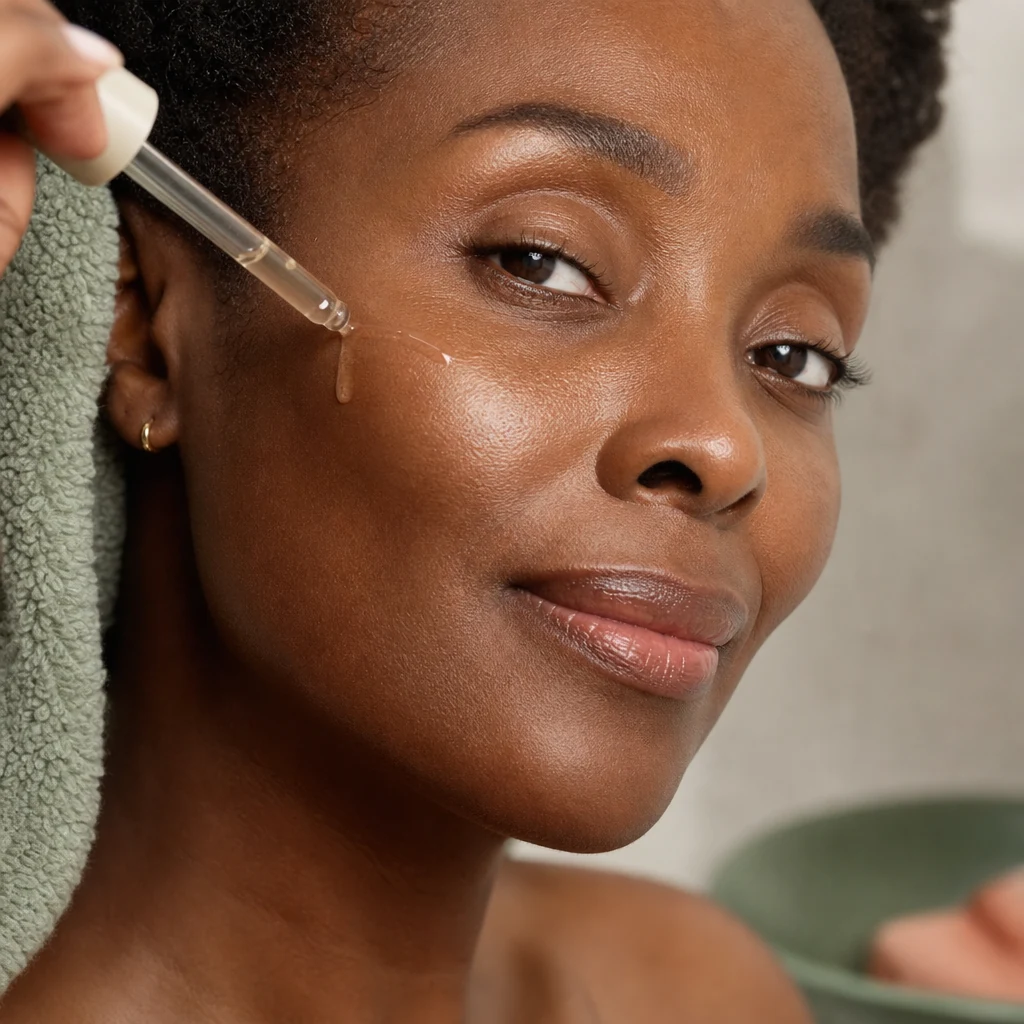
3. **Dispense 4-6 drops** onto damp fingertips.
4. **Press into areas with pigmentation** — cheeks, forehead, jawline, spots on hands.
5. **Wait 30 seconds.**
6. **Apply moisturizer.**
7. **AM: apply SPF 30+** — non-negotiable.
**Advanced protocol (twice daily):**
Same as above, morning and evening. Twice-daily use accelerates results by roughly 30-50%.
**Combination therapy (for melasma or stubborn pigmentation):**
– **Morning:** vitamin C serum + alpha arbutin + moisturizer + SPF
– **Evening:** alpha arbutin + retinol (alternate nights) + moisturizer
**Sequencing rule:** water-based serums before oil-based. Alpha arbutin before any squalane-based serum.
**Don’t rely on this alone for deep melasma.** Melasma often requires dermatology-directed protocols with tranexamic acid, hydroquinone cycling, or in-office procedures.
## Best paired with
**Vitamin C serum (mornings).** Complementary mechanism — vitamin C is an antioxidant that also fades pigmentation; alpha arbutin blocks new pigmentation. Use vitamin C first, wait, then alpha arbutin.
**Niacinamide serum (either time).** Niacinamide reduces melanosome transfer from melanocytes to keratinocytes — a third pigmentation pathway. Layers well.
**Retinol (evening).** Retinol accelerates cell turnover, which pushes hyperpigmented cells to the surface faster where they can slough off. Combined with alpha arbutin (in the morning), this is a powerful pigmentation stack.
**Azelaic acid (either time).** Anti-inflammatory and lightly brightening. Excellent for PIH from acne.
**Hyaluronic acid serum (before).** Adds base hydration.
**SPF 30+ (every morning).** Non-negotiable. EltaMD UV Clear, La Roche-Posay Anthelios, or CeraVe Hydrating Mineral all work.
**Ceramide moisturizer (last).** CeraVe Moisturizing Cream, La Roche-Posay Toleriane, or any barrier-supporting cream.
## Skin-type suitability
| Skin type | Fit | Notes |
|—|—|—|
| All | Excellent | Universal skin-type suitability |
| Sensitive | Very good | Rarely triggers reactions |
| Oily | Excellent | Water base with no oily finish |
| Combination | Excellent | Layers well with all routine additions |
| Dry | Very good | Follow with a rich moisturizer |
| Normal | Excellent | Ideal profile |
| Mature | Very good | Age-related pigmentation responds well |
| Acne-prone | Excellent | Especially effective on PIH from acne |
| Rosacea-prone | Good | Better than most brighteners; still monitor |
| Pregnancy | Excellent | One of the few often discussed as pregnancy-compatible brighteners |
## Worthy alternatives
**The Ordinary Ascorbyl Glucoside Solution 12%** — around $12. Vitamin C derivative, gentler than L-ascorbic acid. Complementary rather than a replacement.
**The Ordinary Azelaic Acid Suspension 10%** — around $8. Different mechanism (anti-inflammatory + tyrosinase inhibition). Especially good for PIH from acne and rosacea-associated redness.
**Good Molecules Discoloration Correcting Serum** — around $12. Contains tranexamic acid and niacinamide. Good for melasma.
**Naturium Alpha Arbutin Serum 2%** — around $14. Similar formulation with added tremella (a moisture-binding mushroom extract).
**Paula’s Choice 10% Azelaic Acid Booster** — around $38. Premium azelaic acid option with salicylic acid added.
**SkinCeuticals Discoloration Defense** — around $115. High-end tranexamic acid + kojic acid + niacinamide serum. Different mechanism, faster on stubborn pigmentation.
**Prescription hydroquinone 4%** — around $30-80 with insurance. Faster and stronger; cycle 3 months on, 3 months off to avoid rebound.
## Bottom line
**Editorial Rating: 4.4 / 5**
The Ordinary Alpha Arbutin 2% + HA is one of the best-value pigmentation serums on the market. It works via the same tyrosinase-inhibition mechanism as hydroquinone but more gently, with no rebound risk and no legal or pregnancy restrictions. For post-inflammatory hyperpigmentation and sun spots, it delivers meaningful fading over 3-4 months of consistent use.
At under $10 for a 30ml bottle that lasts 2-3 months, the value is exceptional. Pair it with a vitamin C serum in the morning, retinol at night (if not pregnant), and daily SPF, and you have a comprehensive pigmentation protocol for under $40 across all products.
Set expectations correctly: this isn’t a magic overnight fix. Alpha arbutin is a slow-burn ingredient. If you can commit to 3-4 months of consistent daily use with strict SPF discipline, you’ll see visible cosmetic changes. If you’re expecting hydroquinone-speed fading in a few weeks, you’ll be disappointed — but then again, hydroquinone comes with irritation and rebound risks that alpha arbutin doesn’t.
For most users with mild to moderate hyperpigmentation, this is where to start. It’s cheap, safe, and effective enough that many people never need to escalate to prescription options.
For fading post-inflammatory hyperpigmentation, sun spots, and general uneven tone, The Ordinary Alpha Arbutin 2% + HA is the smart entry point. Well-tolerated even by sensitive skin, often discussed as pregnancy-compatible, and priced at under $10 for a 3-month supply. Don't expect prescription-speed results — plan for 3-4 months of consistent use — but for the right user (mild to moderate hyperpigmentation, daily SPF discipline), it delivers meaningful fading without the irritation risk of hydroquinone or the pH sensitivity of vitamin C.
View on Amazon →Prices and availability current on Amazon. As an Amazon Associate we earn from qualifying purchases.