 🔍 Hover to zoom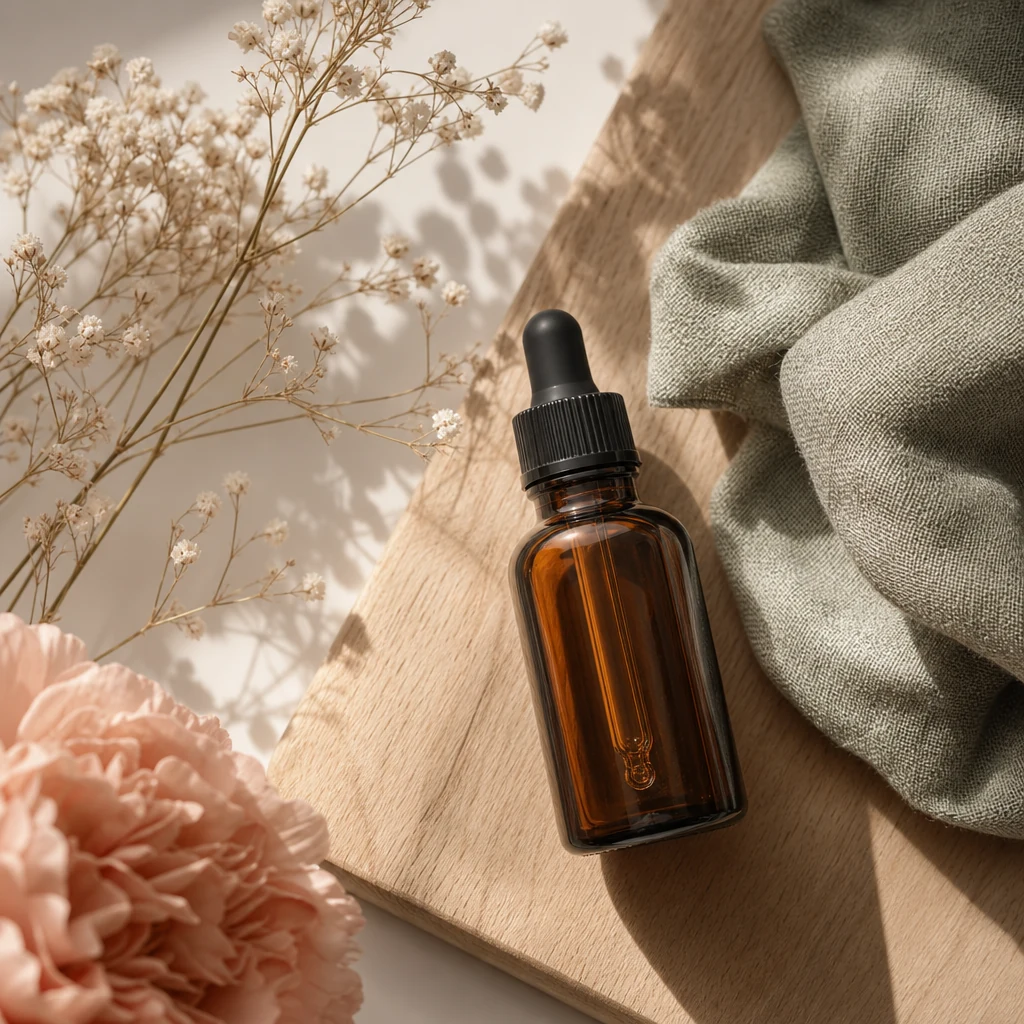
TruSkin Vitamin C Serum Review: The Amazon Best-Seller — What It Is and What It Isn’t
The Amazon vitamin C hit — accessible, aloe-based, and adequate for beginners, though not the same category as pharmacy or specialty options.
- Sodium ascorbyl phosphate (a vitamin C derivative), not L-ascorbic acid
- Aloe vera base with vitamin E and hyaluronic acid
- Widely available on Amazon at accessible prices
- Amber glass bottle with dropper
- Fragrance-free formulation
Check the latest price and availability on Amazon.
View on Amazon →As an Amazon Associate, SkincareTopic earns from qualifying purchases.
Why We Recommend It
- Genuinely accessible entry into vitamin C serum use
- Aloe base is soothing for sensitive users
- Amber glass packaging protects the formula
- Cheaper than dermatology-brand options
- Widely available and well-stocked
Consider Before Buying
- Vitamin C derivative, not L-ascorbic acid — weaker effect
- Marketing overstates the antioxidant claims
- No published stability data or third-party testing
- Concentration is not stated on label — a red flag for potency
Key Ingredients
Product note: This review is for general shopping and skincare education only. Product fit varies by skin type, pregnancy or breastfeeding status, medications, allergies, and diagnosed conditions. For persistent acne, rosacea, eczema, melasma, hair loss, reactions, or pregnancy-related concerns, ask a dermatologist, OB-GYN, or other licensed clinician before relying on an over-the-counter product.
TruSkin Vitamin C Serum is one of the most-purchased vitamin C serums on Amazon — routinely appearing in the “best-seller” top spot in its category. That kind of Amazon dominance is real evidence of value at some level: people buy it, use it, and buy it again. But “Amazon best-seller” also reflects marketing spend, pricing accessibility, and Amazon’s algorithmic biases as much as it reflects product efficacy.
The honest read on TruSkin is that it’s a fine entry-level vitamin C serum. Not comparable to dermatology-grade formulations, but not bad either. For users who’ve never tried vitamin C and want an accessible starting point, it’s a defensible choice. For users seeking the meaningful visible-aging and brightening effects vitamin C is famous for, this isn’t the product that delivers them.
## What it is
TruSkin Vitamin C Serum is a water-based serum in a 1oz amber glass dropper bottle. It’s marketed as a “vitamin C serum with hyaluronic acid + vitamin E.” The formulation is meaningful to understand — because what’s in it (and what isn’t) determines what you can expect.
**Sodium ascorbyl phosphate (SAP).** The vitamin C form used. SAP is a stable derivative of vitamin C — it doesn’t degrade the way L-ascorbic acid does, doesn’t need low pH to work, and doesn’t cause the tingling/stinging that fresh L-AA can. It also converts to L-ascorbic acid in skin only inefficiently, providing weaker antioxidant and brightening effect than direct L-AA formulations.
**Concentration not stated.** Notably, TruSkin doesn’t publish the sodium ascorbyl phosphate concentration in their serum. Standard SAP formulations are 2-5%; premium ones (like Mad Hippie) reach 10%. Without a stated concentration, potency is a black box.
**Aloe vera base.** The primary vehicle. Provides light hydration and mild anti-inflammatory effect. Softer sensory experience than water-based competitors.
**Vitamin E (tocopheryl acetate).** Antioxidant partner ingredient. Works synergistically with vitamin C.
**Hyaluronic acid.** Humectant. Adds hydration.
**Witch hazel.** A mild astringent. Some users find witch hazel drying or irritating; TruSkin uses a small amount.
**Jojoba oil.** Non-comedogenic oil for slight emollient effect.
**Amber glass packaging.** Protects the formula from UV degradation. A genuine positive.
**Fragrance-free.** No added fragrance.
**No parabens, no sulfates.** Cleaner than mass-market drugstore serums.
## Who this is for
**Beginner vitamin C users.** If you’ve never used a vitamin C serum, the gentler SAP formulation is a low-risk entry point.
**Sensitive skin users.** L-ascorbic acid formulations can sting or trigger irritation; SAP typically doesn’t.
**Users who want an Amazon-available option.** Not everyone wants to buy skincare from Sephora or dermatology suppliers.
**Users on a budget.** At $20-30 for a 1oz bottle, it’s cheaper than most vitamin C alternatives.
**Users who value the amber glass packaging.** Protecting vitamin C from light degradation matters.
**Users of aloe-based skincare.** If you like the aloe sensory experience, this fits.
**Pregnancy skincare.** All vitamin C forms are often discussed as pregnancy-compatible.
Who this **isn’t** the best pick for:
– Users seeking real L-ascorbic acid results — choose Maelove, SkinCeuticals, or The Ordinary Vitamin C Suspension 23% instead.
– Users seeking published stability data or clinical study support.
– Users concerned about the un-stated concentration (a real red flag).
– Users who want the strongest antioxidant protection available.
## Key ingredients
**Sodium Ascorbyl Phosphate (SAP).** A vitamin C derivative bonded to a phosphate group for stability. Doesn’t require low pH formulations. Converts to L-ascorbic acid via phosphatase enzymes in skin. Bioavailability is significantly lower than direct L-AA — studies suggest 5-15% conversion efficiency compared to direct L-AA delivery.
**Aloe Barbadensis Leaf Juice.** The primary vehicle. Provides light hydration and mild anti-inflammatory effect. Softens sensory experience compared to water-based serums.
**Sodium Hyaluronate.** Low-molecular-weight hyaluronic acid. Humectant.
**Tocopheryl Acetate (Vitamin E).** Antioxidant. Synergistic with vitamin C — regenerates oxidized vitamin C back to active form.
**Witch Hazel (Hamamelis Virginiana).** Mild astringent. Some anti-inflammatory effect. Can be drying for some users.
**Jojoba Oil.** Non-comedogenic plant oil. Mild emollient benefit.
**Gotu Kola (Centella Asiatica).** Anti-inflammatory botanical. Small percentage.
**Horsetail Extract.** Contains silica. Marketing-driven inclusion; unclear practical benefit.
**Ferulic Acid.** An antioxidant that stabilizes vitamin C in some formulations. Present in TruSkin but at unstated concentration.
**Wildcrafted botanicals.** Various — mostly marketing-driven inclusions.
**Preservatives.** Phenoxyethanol.
The formulation is a real formulation — not a snake-oil concoction. But the un-stated concentrations and the choice of SAP over L-AA place it in the “beginner accessible” tier rather than the “clinical results” tier.
## How it performs
**Mild brightening over 8-12 weeks.** Real but subtle. Users generally report slight improvement in overall tone.
**Non-irritating.** No stinging, no burning, no redness. This is the primary strength.
**Doesn’t oxidize as fast as L-AA formulations.** SAP is stable — the serum maintains its clear-to-slightly-yellow color for 6-12 months if stored properly.
**Light hydrating effect.** Aloe base and HA contribute mild hydration.
**Layers well under moisturizer and sunscreen.**
**Absorbs in 60-90 seconds.**
**Doesn’t sting eyes.** Rare complaint.
**Aloe scent is real.** A mild plant-derived scent. Not perfume; some users detect it, some don’t.
**Modest visible-aging benefit.** Real but weaker than L-ascorbic acid alternatives.
**No dramatic transformations.** Manage expectations — this is a supporting product, not a hero product.
## How to use it
**Basic morning application:**
1. **Cleanse and pat dry.**
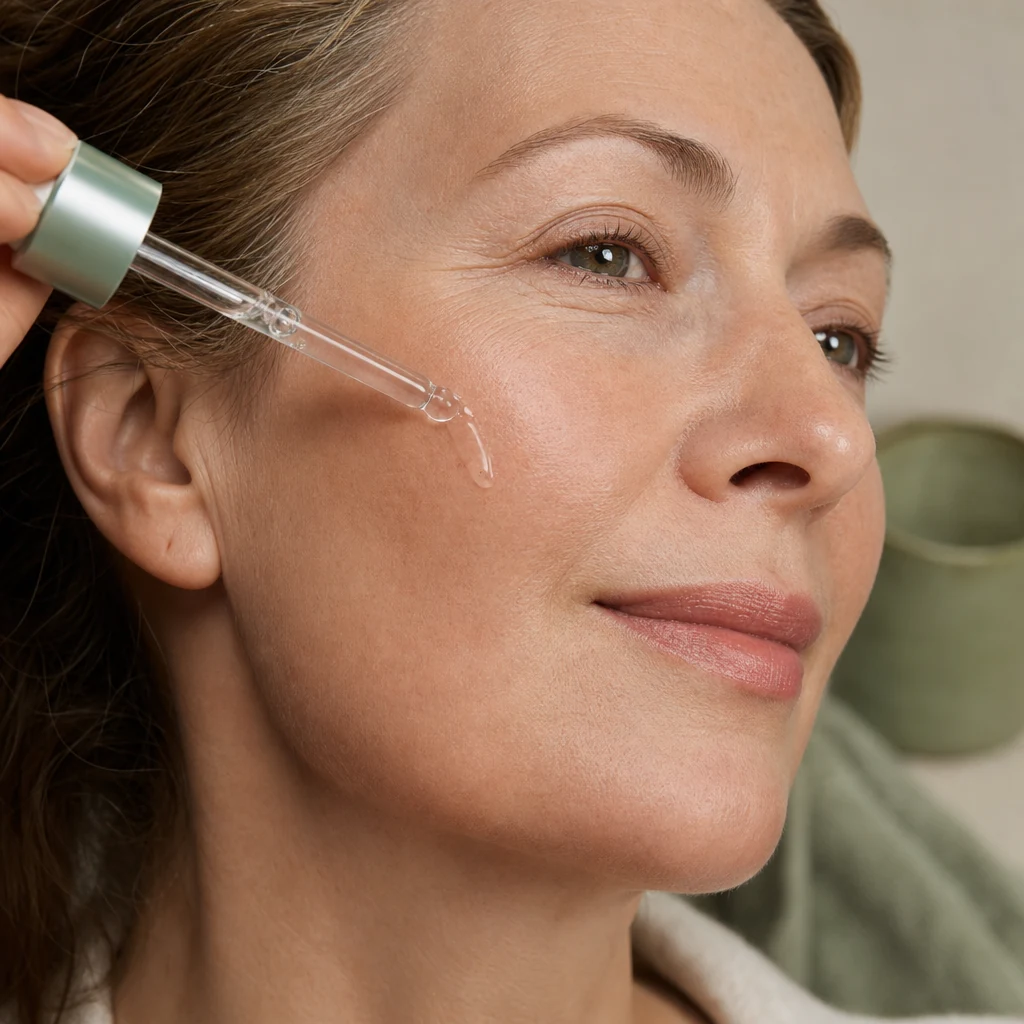
2. **Dispense 4-6 drops** onto damp fingertips.
3. **Press into face and neck.**
4. **Wait 30 seconds.**
5. **Apply moisturizer.**
6. **Apply SPF 30+.**
**For evening use:**
Some users apply twice daily. Fine — SAP is stable and doesn’t cause the photosensitivity concerns of retinoids.
**Storage:**
– **Cool, dry location.** Bathroom cabinet is fine; don’t leave in direct sunlight.
– **Refrigeration optional.** Not required with SAP formulations (unlike L-AA).
– **Check color periodically.** If clear-to-yellow becomes brown or orange, the product has oxidized and lost most of its potency.
**When to discard:**
– After 6-12 months post-opening if stored properly.
– Immediately if color changes significantly or scent becomes off.
## Best paired with
**Niacinamide serum (either time).** Complementary. Layer without concern.
**Retinol (evening, on alternate nights).** Different mechanism, complementary results.
**Hyaluronic acid serum (before, on damp skin).** Adds base hydration.
**Ceramide moisturizer (after).** Basic barrier support.
**Sunscreen (morning, after).** Non-negotiable — vitamin C use without SPF is largely wasted.
**Alpha arbutin (either time).** Combined brightening approach.
**Avoid same-application with:** High-strength AHA/BHA — potentially incompatible with SAP.
## Skin-type suitability
| Skin type | Fit | Notes |
|—|—|—|
| Sensitive | Excellent | Gentle SAP form; unlikely to irritate |
| Normal | Very good | Beginner-friendly entry point |
| Dry | Very good | Aloe base helps |
| Combination | Very good | Water-based, layers well |
| Beginner | Excellent | Approachable, safe |
| Mature | Good | Consider stronger L-AA formulations |
| Acne-prone | Good | Non-comedogenic |
| Rosacea-prone | Good | Gentler than L-AA options |
| Oily | Good | Light texture |
| Advanced skincare user | Fair | Underpowered for advanced routines |
## Worthy alternatives
**The Ordinary Ascorbyl Glucoside 12%** — around $12. Similar SAP-tier product at lower price. Direct competitor.
**The Ordinary Vitamin C Suspension 23% + HA Spheres 2%** — around $10. Real L-ascorbic acid at high concentration. Gritty texture but genuine efficacy.
**Maelove Glow Maker (Vitamin C, E Ferulic)** — around $30. L-ascorbic acid at 15% with ferulic acid. Excellent value real vitamin C.
**Mad Hippie Vitamin C Serum** — around $34. SAP-based competitor at higher concentration.
**SkinCeuticals C E Ferulic** — around $169. Gold-standard L-ascorbic acid formulation with published clinical trials.
**Timeless 20% Vitamin C + E Ferulic Acid** — around $25. Budget alternative to SkinCeuticals with similar core actives.
**Drunk Elephant C-Firma Day Serum** — around $80. Premium water-based formulation.
**Kiehl’s Powerful-Strength Line-Reducing Concentrate** — around $80. Alternative premium vitamin C option.
## Bottom line
**Editorial Rating: 3.9 / 5**
TruSkin Vitamin C Serum earns its Amazon best-seller status through accessibility, marketing, and being genuinely non-terrible. It’s not the vitamin C serum that delivers dermatology-grade results — that requires L-ascorbic acid at proper concentrations (10-20%), stable formulation, and typically higher spend.
What TruSkin offers is a low-risk entry point. If you’ve never used a vitamin C serum and want to try one without spending $80+ or dealing with the finicky stability of L-AA, TruSkin is a reasonable start. If you use it for a few months, like the ritual, and want more meaningful cosmetic changes, upgrade to Maelove Glow Maker (best budget L-AA), Timeless (mid-range), or SkinCeuticals (premium).
The un-stated SAP concentration is a real caveat. Products that disclose concentrations (like Mad Hippie’s 10% SAP) are more transparent about what you’re buying. TruSkin’s opacity is a mild negative that consumers should factor into value assessment.
For its category (accessible, gentle, Amazon-available), it’s a solid choice. For results-focused vitamin C use, look elsewhere. Both perspectives can be true simultaneously — this is a good beginner serum in a category with much better options for anyone past beginner status.
TruSkin Vitamin C Serum is a decent beginner vitamin C for users who want an accessible Amazon-available option. It uses sodium ascorbyl phosphate (a vitamin C derivative) rather than L-ascorbic acid — meaning gentler application but weaker antioxidant and brightening effect. For entry-level use it's fine. For users seeking the actual results L-ascorbic acid provides, upgrade to Maelove Glow Maker ($30) or SkinCeuticals C E Ferulic ($169). The Amazon best-seller status is real, but so is the caveat that most 'best-seller' status reflects volume of sales rather than dermatology-grade efficacy.
View on Amazon →Prices and availability current on Amazon. As an Amazon Associate we earn from qualifying purchases.